
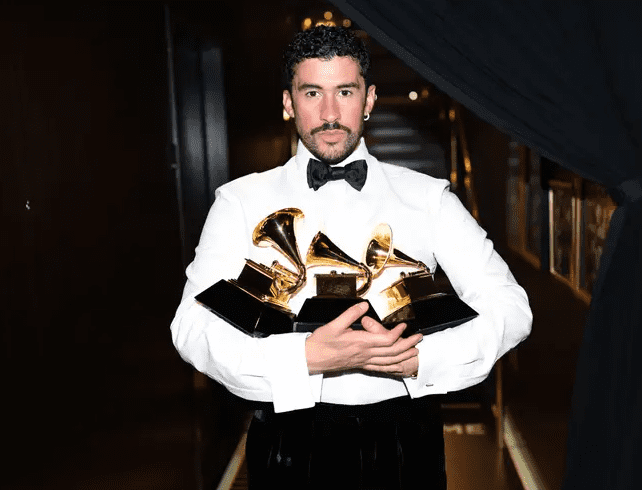
Bad Bunny’s 2026 Grammy win for Album of the Year was not just a musical milestone. It was a cultural reckoning. When Debí Tirar Más Fotos became the first fully Spanish language album to claim the Recording Academy’s top honor, it challenged long standing assumptions about language, power, and who gets to define American culture.
More importantly, Bad Bunny used the Grammys stage to remind Puerto Ricans, immigrants, and marginalized communities of something deeper than awards. Visibility is not permission. It is presence. And presence is power.
This moment deserves analysis, not applause alone.
Bad Bunny Album of the Year and the Shift in Cultural Authority
Bad Bunny winning Album of the Year signaled a shift that has been building for years. The Grammys, historically cautious and often behind cultural reality, validated a body of work rooted in Puerto Rican identity, collective memory, and political consciousness.
This was not a crossover album designed to meet English speaking markets halfway. It did not dilute its language or themes. Instead, the institution moved toward the culture.
That distinction matters.
In cultural economics, power shifts when dominant systems adapt to creators rather than creators adapting to systems.
A Speech That Spoke Beyond the Room
Language as a political act
Bad Bunny’s acceptance speech unfolded mostly in Spanish. That choice alone carried weight. In a climate where speaking Spanish in public has become politicized in parts of the United States, the decision was deliberate.
When he said, “Puerto Rico, we are much bigger than 100 by 35,” he reframed geography as imagination. The island’s size became irrelevant compared to its cultural reach.
His single English sentence, dedicated to people forced to leave their homelands to pursue dreams, widened the message without softening it. It connected Puerto Rico to every displaced community listening.
This was not rhetoric. It was recognition.
Debí Tirar Más Fotos as a Political Album
Art that refuses neutrality
The idea that music can or should exist outside politics collapses under scrutiny. Debí Tirar Más Fotos engages directly with questions of identity, belonging, grief, and colonial legacy.
Bad Bunny has been explicit about his intentions. The album was designed to plant seeds, especially for young Puerto Ricans, to think critically about cultural preservation and external forces shaping their future.
This makes the album political by design, not by accident.
The Grammys did not reward neutrality. They rewarded engagement.
Why This Win Matters in 2026
Context amplifies meaning
Timing is everything. Bad Bunny’s Album of the Year win arrived during a period of heightened anti immigrant rhetoric and aggressive enforcement policies in the United States. Latino communities have been disproportionately affected, both symbolically and materially.
Against that backdrop, a Spanish language album centered on Puerto Rican experience was elevated above English language releases from some of the world’s biggest stars.
Cultural recognition does not erase political harm. But it can disrupt narratives that seek to marginalize.
This win functioned as a counter signal.
ICE, Resistance, and Moral Clarity
Earlier in the ceremony, while accepting Best Música Urbana Album, Bad Bunny addressed ICE directly. He rejected dehumanizing language and affirmed shared humanity.
What made the moment powerful was its clarity. There was no abstraction. No euphemism. He spoke in English, intentionally, to ensure the message traveled beyond cultural boundaries.
In doing so, Bad Bunny demonstrated something many public figures avoid. Moral positioning.
Silence is often framed as professionalism. In reality, silence often reinforces existing power.
The Business Risk That Wasn’t
Why brands fear politics and why icons do not
From a branding perspective, Bad Bunny’s stance defies conventional caution. Many artists are advised to avoid political messaging to protect commercial partnerships.
Yet Bad Bunny’s influence has only grown.
Why?
Because modern audiences value alignment over neutrality. Trust is built when artists reflect the lived realities of their communities. That trust translates into longevity, not fragility.
In a fragmented media economy, authenticity scales better than appeasement.
Redefining American Music Without Asking Permission
Bad Bunny’s win challenges outdated definitions of American music. Spanish language art is often framed as adjacent or external to the mainstream. This moment rejected that framing.
Puerto Rican culture is not an import. It is woven into American history through migration, labor, and creativity.
By awarding Album of the Year to Debí Tirar Más Fotos, the Recording Academy acknowledged that reality, whether intentionally or not.
Cultural inclusion is not about diversity quotas. It is about accurate representation of who is shaping culture now.
The Grammys and Institutional Catch Up
The Grammys have long struggled with relevance. They often reward consensus rather than innovation. This decision suggests an attempt to realign with cultural momentum.
However, it is important to remain critical. One historic win does not erase decades of exclusion. Progress is measured in patterns, not moments.
Still, moments matter when they shift expectations.
Bad Bunny’s Album of the Year win raised the bar for what the institution can no longer ignore.
Why Bad Bunny’s Influence Extends Beyond Music
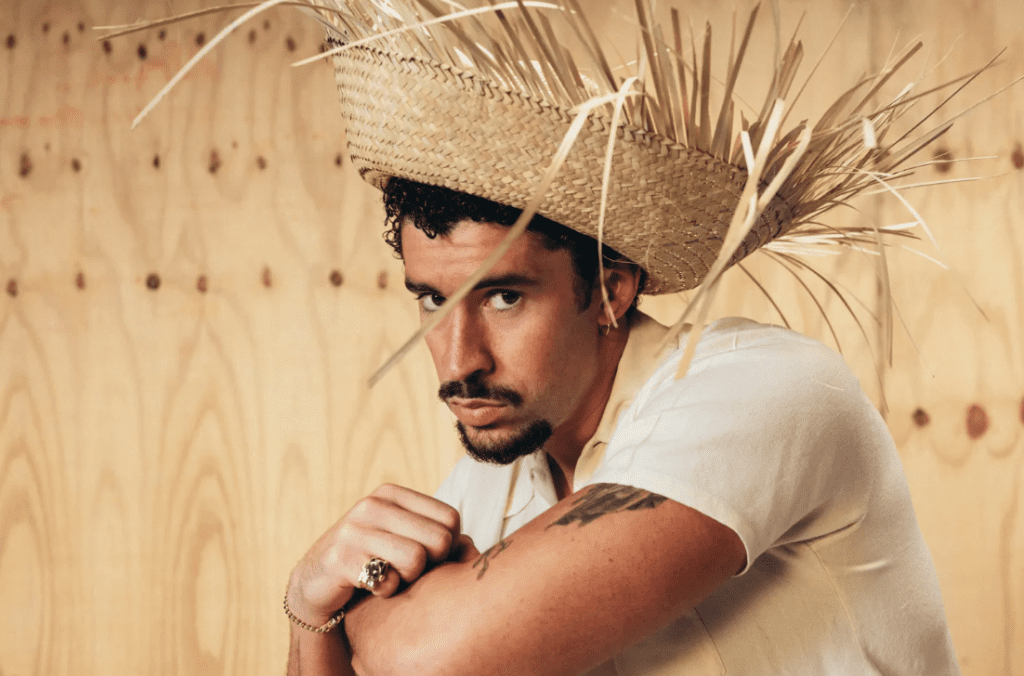
Bad Bunny is not simply a musician with opinions. He is a cultural operator. His platform spans fashion, film, sports, and global media. Each move reinforces a coherent worldview.
He does not translate himself for acceptance. He invites institutions to meet him where he stands.
That posture is the hallmark of modern icons.
Conclusion
Bad Bunny’s Album of the Year win was not just historic. It was instructive. It revealed how art, politics, and identity intersect whether institutions are comfortable with it or not.
By honoring Debí Tirar Más Fotos, the Grammys acknowledged a truth long evident to audiences. Cultural power does not ask for translation. It asserts itself.
And as Bad Bunny reminded Puerto Rico and the world, there is nothing they cannot accomplish.



Comments are closed.