
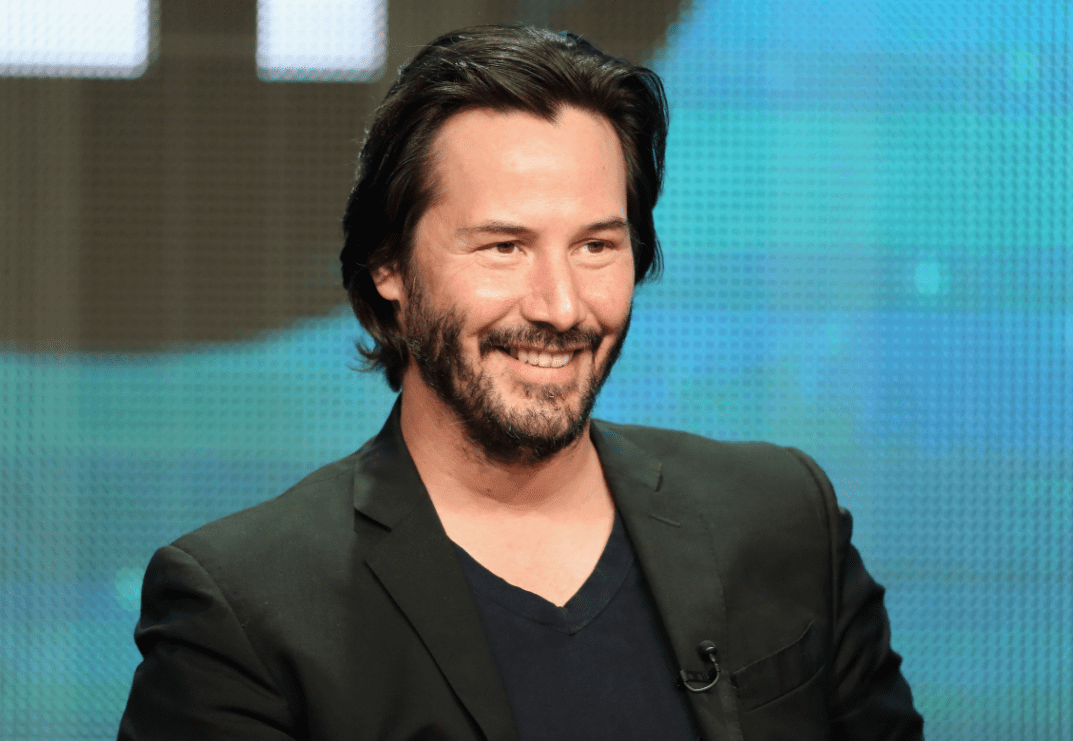
In an era where celebrity often feels manufactured—curated down to the caption, filtered to perfection—Keanu Reeves stands as a quiet contradiction. Not because he resists fame, but because he seems untouched by it. While Hollywood trades in spectacle, Reeves has built a legacy on something far rarer: sincerity. And in a culture starved for authenticity, that may be the most radical act of all.
A Different Kind of Stardom
Reeves’ appeal has never relied on the traditional machinery of celebrity. He is neither omnipresent nor strategically elusive. Instead, he exists in a liminal space—visible, yet deeply private. His performances, from the existential curiosity of Neo in The Matrix to the mythic restraint of the titular antihero in John Wick, reflect a man more interested in questions than answers.
There is something disarming about the way Reeves carries his fame. He does not dominate the screen; he absorbs it. His characters often feel like extensions of a deeper philosophy—searching, restrained, quietly observant. It’s a presence that invites projection, allowing audiences to see themselves in him rather than simply watch him.
The Power of Quiet Generosity
If Hollywood has its loud philanthropists, Reeves belongs to a different tradition entirely. One that doesn’t announce itself.
Stories of his generosity have become almost folkloric. A significant portion of his earnings from The Matrix was quietly redirected toward cancer research—an act shaped by personal loss and his sister’s battle with leukemia. He later established a private foundation supporting children’s hospitals, notably choosing to keep his name detached from the work.
“I don’t like to attach my name to it,” he once said—a statement that feels less like modesty and more like principle.
In an industry where visibility often defines virtue, Reeves’ anonymity reframes what it means to give. Not as performance, but as responsibility.
Humanity in the Margins
It is not just the grand gestures that define Reeves, but the accumulation of small, deeply human moments. Offering his seat on the subway. Waiting patiently in line for his own event. Sharing a shuttle ride with stranded passengers after a flight disruption—reading local trivia aloud as if hosting a road trip among strangers.
These are not acts of calculated relatability. They are glimpses of a man who has never fully separated himself from the ordinary.
Even the internet, with its appetite for irony, has embraced him without cynicism. The “Sad Keanu” meme—an image of the actor alone on a park bench—could have easily been reductive. Instead, it became something strangely tender. A symbol not of isolation, but of recognition. Of seeing a global icon exist in the same quiet solitude as everyone else.
Redefining Masculinity, Softly
Reeves’ cultural resonance extends beyond kindness—it touches on something more profound: a redefinition of masculinity. In an industry long dominated by performative bravado, he offers an alternative model rooted in gentleness, introspection, and respect.
His now-viral “hover hand” in photographs—deliberately avoiding physical contact with women—has been widely interpreted as a subtle but powerful gesture of consent and awareness. It’s a small act, but in the age of hyper-visibility, small acts carry weight.
Off-screen, his long-term relationship with Alexandra Grant further reinforces this ethos. Their partnership, understated and intellectually grounded, resists the spectacle often expected of celebrity romance. It is, like Reeves himself, refreshingly unperformed.
Resilience Without Spectacle
To understand Reeves fully is to acknowledge the quiet gravity of his personal history—marked by profound loss and tragedy. Yet he has never allowed grief to become currency. Instead, it exists beneath the surface of his work, informing a depth that feels earned rather than acted.
“Grief changes shape, but it never ends,” he once reflected. It is this understanding—of pain, of impermanence—that seems to anchor his humanity. Not as something to overcome, but something to carry with grace.
The Enduring Myth of Keanu Reeves
Reeves’ recent resurgence—through the global success of the John Wick franchise, voice roles in projects like Toy Story 4, and even his presence in Cyberpunk 2077—has only amplified what fans have long understood: his appeal is not cyclical. It is constant.
He is, paradoxically, both myth and mirror. A global superstar who still feels like a stranger on the subway. A man whose on-screen violence contrasts with an off-screen gentleness that borders on philosophical.
In the end, loving Keanu Reeves is not just about admiring a celebrity. It is about recognizing a version of humanity we hope still exists—and, perhaps, one we aspire to become.










Comments are closed.