

Introduction: The Actress Who Refuses to Be Predictable
There are actors who rise with the industry—and then there are those who quietly reshape it. Anya Taylor-Joy has never belonged to the first category.
In 2026, she stands at a rare intersection: critically respected, commercially magnetic, and creatively unpredictable. Fresh off the success of The Gorge and stepping into a new wave of high-profile projects—from the surreal spectacle of The Super Mario Galaxy Movie to the psychologically charged Apple TV+ series Lucky—Taylor-Joy is no longer emerging. She is defining.

And yet, what makes her compelling isn’t scale. It’s control.
The Power of Presence in a Post-Dialogue Era
Taylor-Joy’s performance in Furiosa: A Mad Max Saga signaled a turning point—not just in her career, but in how modern audiences engage with performance. With minimal dialogue, she leaned into something far more difficult: stillness.
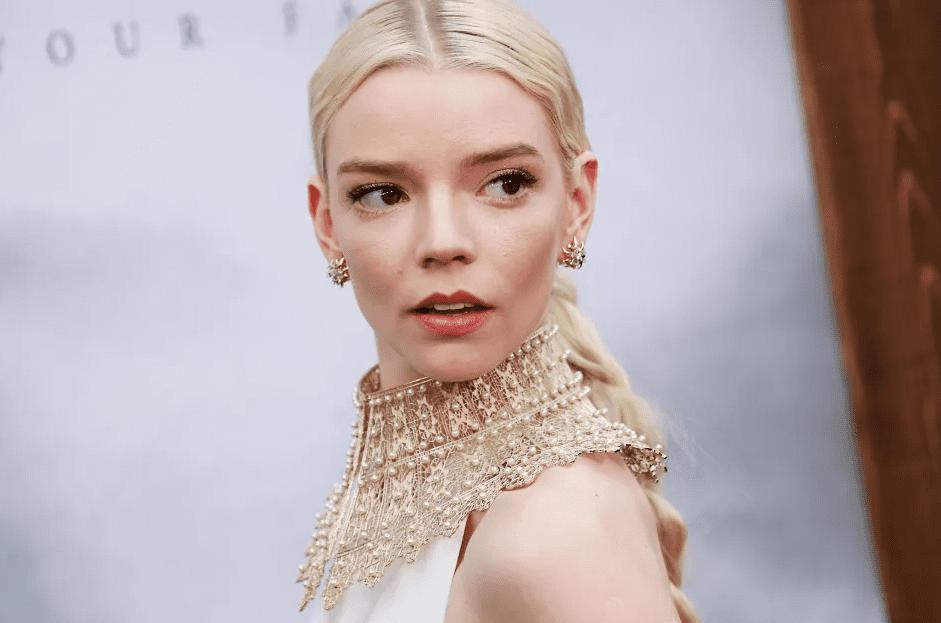
That instinct has carried into her more recent work. In The Gorge, a genre-blending sci-fi romance opposite Miles Teller, she navigates emotional tension through physical restraint, proving once again that spectacle without interiority is forgettable.
Her choices feel deliberate—almost defiant—in a cinematic landscape addicted to noise.
Discipline, Reinvention, and the Performance Body
Long before Hollywood, there was ballet. And like many great performers, Taylor-Joy’s relationship with discipline was forged early.
That foundation is now visible across her filmography. Whether executing physically demanding sequences, embodying heightened psychological states, or preparing for roles that require months of immersion, she approaches acting as both intellectual and physical labor.
This is especially evident in her upcoming slate. In Lucky, she plays a woman pulled back into a criminal past—a role that blends emotional fragility with sharp survival instinct. Meanwhile, projects like Sacrifice push her further into morally complex territory, aligning her with a new generation of actors drawn to ambiguity over archetype.
Even her rumored involvement in future franchise expansions, including a larger role in the evolving Dune universe, suggests an actress unafraid of scale—but unwilling to be consumed by it.
The Global Face of a Borderless Industry
Few modern stars embody globalization quite like Taylor-Joy. Raised between Argentina, London, and the United States, her identity has never been fixed—and that fluidity has become her advantage.
In today’s entertainment landscape, where audiences are increasingly international and storytelling transcends borders, her perspective feels not just relevant, but essential. She approaches characters—and cultures—with curiosity rather than ownership.
That ethos is visible even in her mainstream work. Voicing Princess Peach in The Super Mario Galaxy Movie, she bridges nostalgic IP with contemporary femininity, bringing nuance to a character historically defined by simplicity.
Choosing Difficulty in the Age of Visibility
Taylor-Joy’s career is marked by a consistent refusal to choose the obvious path.
While many actors oscillate between indie credibility and blockbuster visibility, she collapses the distinction. A high-concept streaming hit like The Gorge exists comfortably alongside experimental performances and prestige television.
Even her upcoming projects suggest a fascination with transformation—not just external, but psychological. Whether stepping into crime narratives, dystopian worlds, or emotionally fractured characters, she gravitates toward roles that demand something unresolved.
It’s not about range for the sake of range. It’s about tension.
The Conviction Economy
In an industry increasingly driven by algorithms, Taylor-Joy operates on something far less quantifiable: conviction.
Directors trust her. Audiences believe her. And perhaps most importantly, she trusts herself—even when stepping into the unknown.
That instinct is what allows her to move seamlessly between silence and spectacle, vulnerability and control. It’s what makes her performances feel lived-in rather than performed.
And it’s what separates her from her contemporaries.
Conclusion: Becoming Without Explaining
Anya Taylor-Joy doesn’t over-explain her process, her choices, or her identity—and that restraint is precisely what makes her so compelling.
In 2026, as she balances blockbuster visibility with deeply internal performances, she represents a new kind of stardom: one rooted not in accessibility, but in mystery. Not in perfection, but in precision.
She is not chasing relevance. She is shaping it.
And perhaps that is her greatest role yet.








Comments are closed.