
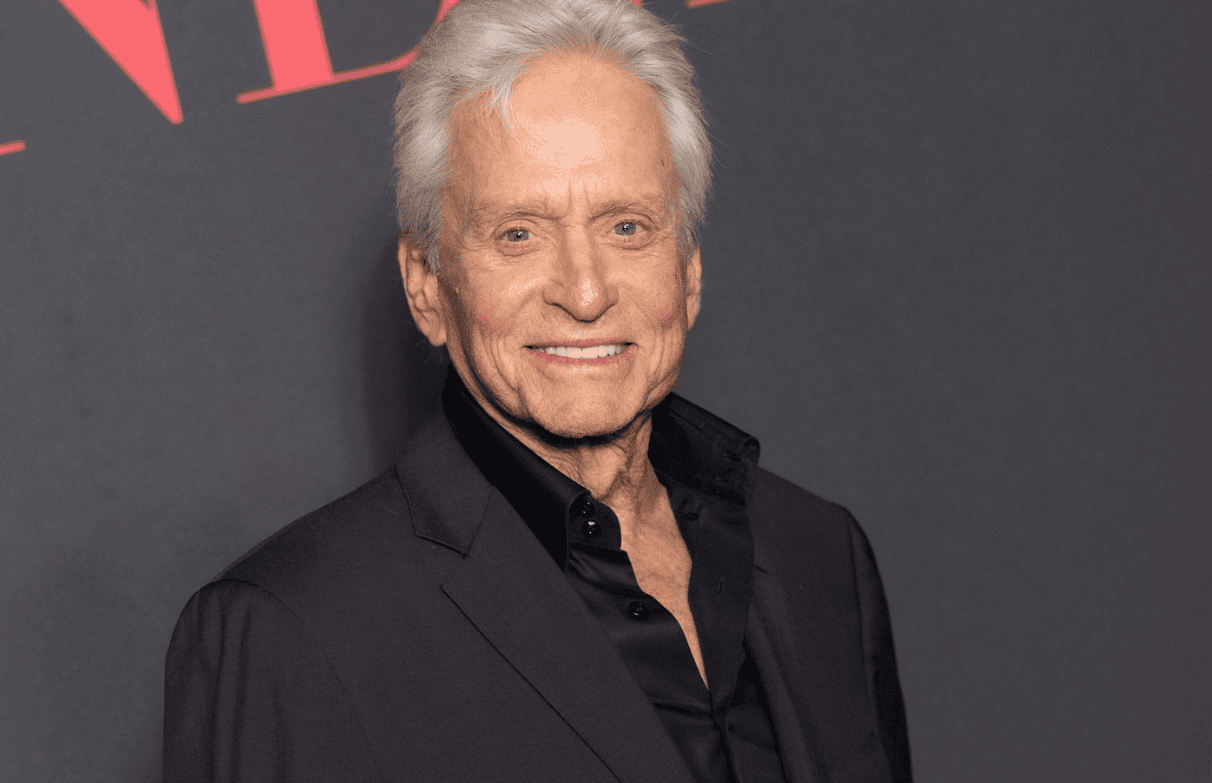
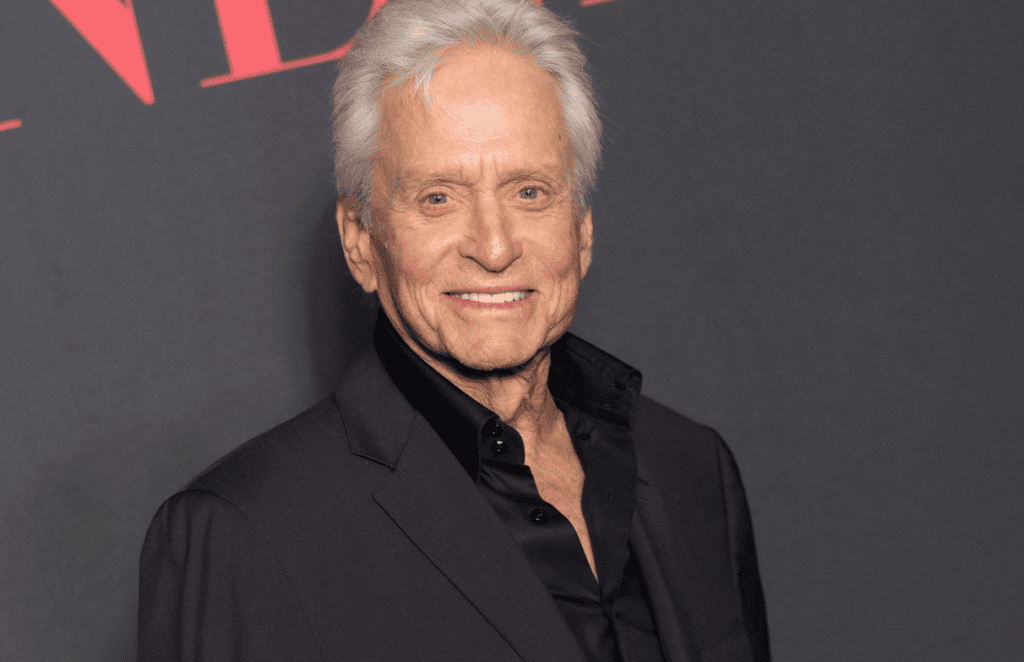
At 82, Michael Douglas is looking back without much interest in polishing the past. In his new memoir, One Helluva Ride, the veteran actor and producer revisits a Hollywood career filled with blockbuster films, complicated relationships, addiction, family turmoil and moments that could easily belong in a screenplay.
The book, published by Grand Central Publishing, offers an unusually candid account of the man behind films such as Wall Street, Basic Instinct, Fatal Attraction and Romancing the Stone. Douglas also writes about the challenge of building his own identity while living in the shadow of his famous father, Kirk Douglas.
Rather than presenting a carefully managed Hollywood biography, the memoir reportedly embraces contradiction. Douglas describes his successes alongside decisions he regrets, including infidelity, heavy cocaine use and a period that ultimately led him to rehabilitation.
Michael Douglas Looks Back on a Remarkable Hollywood Career
Few actors of Douglas’ generation have experienced such a varied career.
He became a major force both in front of and behind the camera, moving between acting and producing while establishing himself as one of Hollywood’s most recognizable leading men.
His filmography includes dramatically different roles, from the morally compromised financial titan Gordon Gekko in Wall Street to the troubled detective in Basic Instinct. He also helped shape major productions as a producer, giving him a perspective on the film industry that extended beyond performing.
Yet Douglas’ career was never simply about fame.
His memoir explores the pressures that accompanied success, including the expectations created by his father’s enormous reputation. Kirk Douglas was already a Hollywood legend, making his son’s effort to establish an independent identity particularly challenging.
That struggle became part of Douglas’ larger journey from Hollywood heir to a star with a legacy of his own.
A Secret Romance With Kathleen Turner
Among the memoir’s most surprising revelations is Douglas’ account of a secret relationship with Kathleen Turner, his co-star in the 1984 adventure comedy Romancing the Stone.
The pair developed celebrated chemistry on screen, which helped make the movie a major success. For decades, however, they publicly denied that their relationship had extended beyond their professional partnership.
Douglas now says that story was not true.
According to his memoir, the two secretly became involved while filming, meeting privately in hotel rooms. He describes himself as separated from his wife at the time, although the situation was evidently more complicated from his wife’s perspective.
The affair eventually came to an end after Douglas’ then-wife, Diandra Luker, confronted Turner.
The revelation is striking partly because Douglas and Turner continued to maintain the public version of events for decades.
Turner has since responded to the disclosure with a relatively relaxed attitude, suggesting that the episode belongs firmly in the distant past.
For Douglas, however, the story illustrates one of the memoir’s central themes: the gap between the carefully constructed public image of Hollywood stars and the messy reality behind it.
Douglas Reveals Another Unexpected Co-Star Romance
The revelations do not stop with Romancing the Stone.
Douglas also writes about a relationship with Jeanne Tripplehorn, who appeared opposite him in Basic Instinct.
That detail is particularly notable because public attention surrounding the movie often focused on Douglas’ chemistry with Sharon Stone. The film became one of the defining erotic thrillers of the early 1990s, ensuring that speculation about its stars followed them for years.
Douglas says the relationship that actually developed was with Tripplehorn.
He describes himself as becoming deeply attached to her while recognising that his personal life was already complicated. Ultimately, the relationship ended after the production, and the two went their separate ways.
The episode adds another layer to Douglas’ reflections on fame, relationships and the difference between what audiences assume and what happens away from the cameras.
Five Phone Calls Changed Douglas’ Love Life
Douglas’ relationship history also intersects with his eventual marriage to Catherine Zeta-Jones.
The couple met in 1998 and married in 2000. They remain one of Hollywood’s best-known long-term marriages.
But Douglas writes that becoming serious with Zeta-Jones required him to make some difficult calls.
He says that, at the time, he was simultaneously seeing several women. Once he and Zeta-Jones became a couple, he contacted five women to tell them he had met someone and would no longer continue those relationships.
The anecdote is revealing because Douglas presents it without pretending that his romantic life was particularly conventional.
His memoir repeatedly acknowledges behaviour that he now views critically, while also attempting to explain the circumstances and mindset behind those choices.
Cocaine, Hollywood Parties and the Road to Rehab
Perhaps among the most serious revelations are Douglas’ descriptions of his cocaine use.
He says he avoided drugs while working but used cocaine heavily during periods between projects. His account portrays drug use as part of a broader party culture that surrounded Hollywood at the time.
Douglas recalls one particularly extreme episode in which he fell asleep with a straw still in his nose.
He also recounts using cocaine with O.J. Simpson during the late 1970s while socialising with Rolling Stone co-founder Jann Wenner.
Looking back, Douglas describes cocaine very differently from the way he apparently viewed it at the time.
He now characterises the drug as ultimately pointless, while acknowledging that he once used it as a way to extend parties and escape pressure.
His drug use eventually contributed to problems in his personal life and played a role in his decision to enter rehabilitation.
Douglas has also pushed back against descriptions of his rehabilitation as treatment for sex addiction, saying that interpretation did not accurately describe what happened.
A Confrontation That Ended in an Ultimatum
Douglas’ memoir also recounts a particularly painful episode involving his first marriage.
During a stay in Los Angeles, he says his wife declined to spend the night with him. Douglas subsequently invited another woman to the hotel.
His wife returned unexpectedly and found them together.
Douglas describes the moment as a major turning point. He says Luker gave him an ultimatum involving rehabilitation or divorce.
He chose rehabilitation.
The episode illustrates one of the memoir’s recurring themes: Douglas is willing to portray himself as responsible for serious mistakes rather than presenting his life as a seamless succession of glamorous Hollywood victories.
He also writes that his first marriage was more complicated than a simple story of an unfaithful husband and a waiting wife, claiming that Luker also had romantic relationships.
The Julia Roberts Incident
Another memorable story involves Julia Roberts and an awards-season party in 1990.
Douglas recalls being intoxicated when he saw Roberts with his teenage son, Cameron. According to Douglas’ account, he reacted angrily and confronted Roberts.
He later apologised and sent flowers to Roberts and her then-fiancé, Kiefer Sutherland.
The incident appears in the memoir as another example of how alcohol, celebrity and family tensions could combine in Douglas’ life.
He says he remained friends with Sutherland but that his relationship with Roberts did not recover in the same way.
A Frightening Threat at the Oscars
Not every dramatic episode in One Helluva Ride involves Douglas’ personal behaviour.
The actor also recalls an alarming incident at the 1992 Academy Awards.
According to his account, an FBI agent warned him that someone inside the venue allegedly intended to attack him with a needle infected with HIV.
Douglas says the warning left him terrified.
Nevertheless, he continued with his scheduled appearance and took the stage with Jodie Foster to present the Academy Award for best actress.
The incident demonstrates another side of celebrity life: the extraordinary security risks and threats that can accompany international fame.
A Memoir About More Than Scandal
It would be easy to reduce One Helluva Ride to its most sensational revelations.
There are affairs, drug use, Hollywood parties, celebrity confrontations and frightening backstage stories. But the broader picture is more reflective.
Douglas writes about his career, his family, his health and the personal costs of decades in the entertainment industry. He also discusses his battle with oral cancer, his son’s imprisonment and the complicated relationship between private mistakes and public reputation.
That makes the memoir more than a collection of celebrity gossip.
It is an account of an actor who has spent much of his life in an industry built around appearances and is now examining what existed behind his own.
Conclusion
Michael Douglas’ memoir One Helluva Ride offers a remarkably candid look at a life shaped by Hollywood success, personal excess and difficult consequences.
The stories of secret romances with Kathleen Turner and Jeanne Tripplehorn, cocaine use, marital infidelity, rehabilitation and a frightening Oscars threat are certain to attract attention. Yet the most interesting aspect of the book may be Douglas’ willingness to revisit those experiences decades later and acknowledge the ways his decisions affected the people around him.
After more than half a century in the entertainment business, Douglas has little left to prove professionally. His memoir instead turns the spotlight inward, presenting a complicated portrait of a Hollywood star who experienced extraordinary highs, painful lows and almost everything in between.
At 82, Michael Douglas is finally telling the story in his own words, and by his account, it has indeed been one helluva ride.









Comments are closed.