
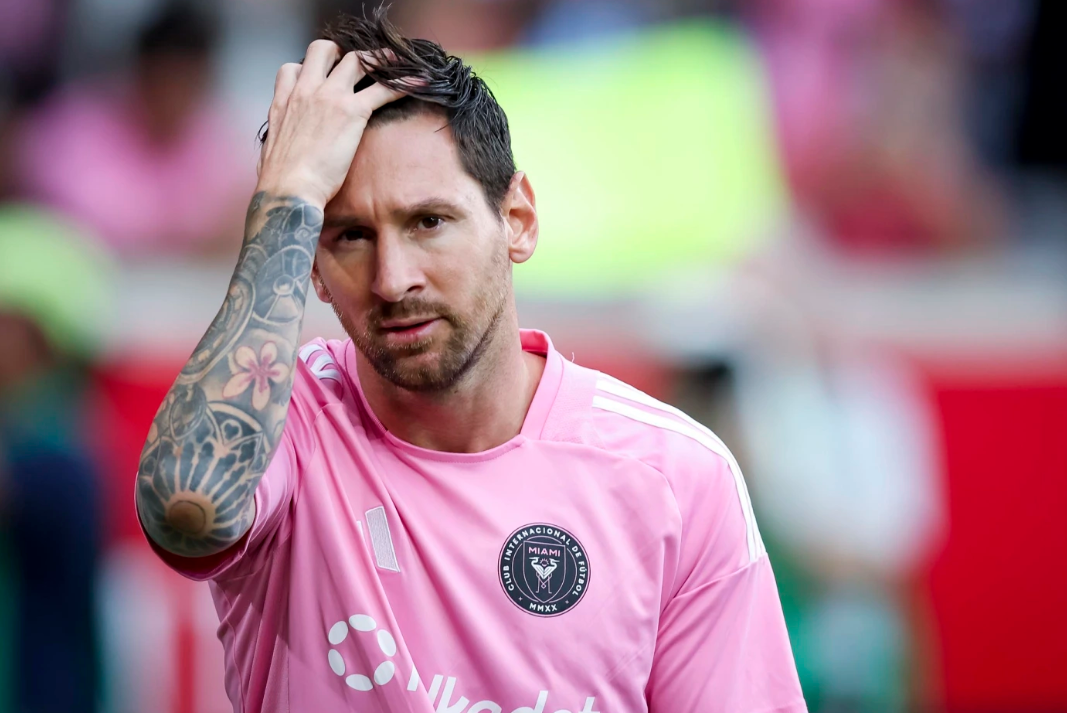
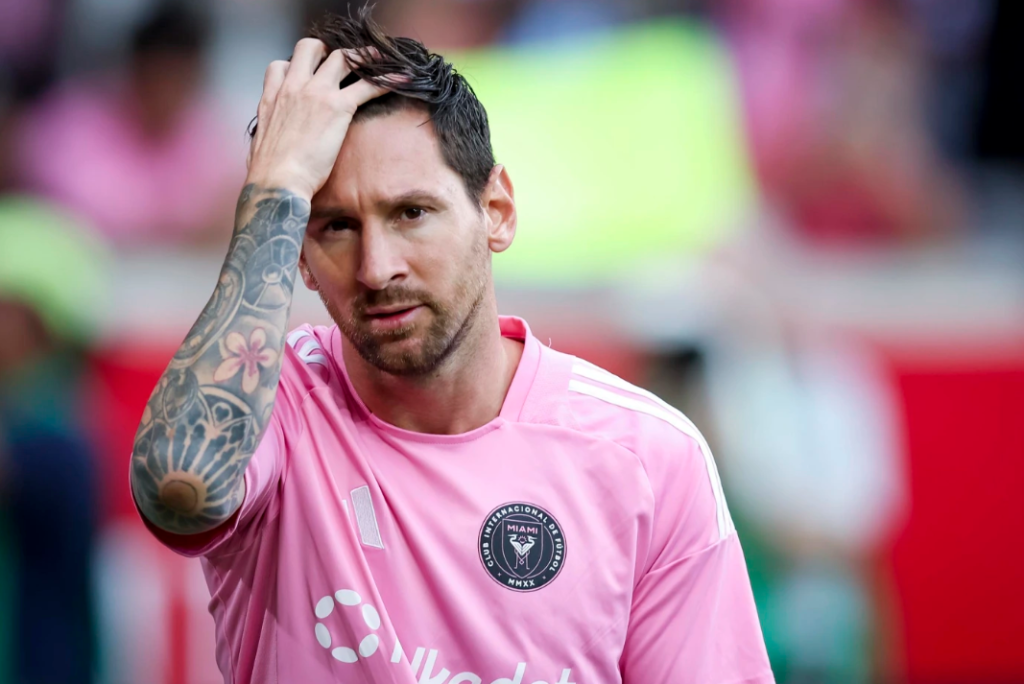
Modern football has become a sport increasingly defined by physical dominance. As money poured into the game, training methods evolved, and athletes became faster, stronger, and taller. Today’s footballers are often elite physical specimens — powerful, explosive, and meticulously conditioned.
Yet standing among them is a man who defies that formula.
At just 1.70 meters (5’7”), Lionel Messi never looked like the prototype of a global sporting superstar. And yet, through extraordinary technique, intelligence, and creativity, he has not only survived in this physical era of football — he has dominated it.
For nearly two decades, Messi has stood above the rest of the footballing world. Records shattered, trophies lifted, and moments of magic have turned him into more than just a player. To millions, he has become something closer to a myth.
But the story of Lionel Messi almost ended before it even began.
The Boy From Rosario
Lionel Andrés Messi was born on June 24, 1987, in Rosario, Argentina, a city where football pulses through everyday life. Like many Argentine children, Messi’s earliest memories are tied to the ball.
His father, Jorge Messi, coached a local youth team called Grandoli, and at the age of four, Lionel joined the squad. Even at that age, his talent was obvious. He moved differently than other children — quicker, more precise, with an instinctive understanding of the game.
But the person who believed in him most was his grandmother, Celia.
She accompanied him to training sessions, encouraged him constantly, and supported his dream long before anyone imagined how far it might take him. Years later, Messi would dedicate his goals to her memory, pointing toward the sky in quiet tribute.
By the age of six, Messi had joined Newell’s Old Boys, one of Rosario’s most prestigious football academies. There, he became the star of a youth team that reportedly lost only one match in four years, scoring hundreds of goals.
Everything pointed toward a bright future — until a devastating diagnosis changed everything.
The Diagnosis That Almost Ended His Career
At nine years old, Messi stopped growing.
Doctors soon discovered the reason: growth hormone deficiency, a condition that prevented normal physical development. Without treatment, his dream of becoming a professional footballer would almost certainly disappear.
The treatment required daily injections of growth hormone, costing nearly $1,000 per month — far beyond what his family could afford.
Initially, Newell’s Old Boys agreed to help cover the cost. But eventually the club withdrew its support, leaving the Messi family desperate. Several Argentine clubs admired the boy’s talent but refused to pay for the treatment.
It seemed like the end.
But fate intervened from across the Atlantic.
A Napkin That Changed Football History
In 2000, Messi’s family traveled to Spain to seek a trial with FC Barcelona.
Barcelona scouts were stunned by what they saw. Despite his size, Messi possessed breathtaking technical ability — lightning dribbling, perfect balance, and an almost supernatural control of the ball.
Yet the club hesitated.
Signing such a young player was unusual, and the medical costs added further uncertainty. Negotiations stalled until Messi’s father delivered an ultimatum: sign my son or we return to Argentina.
Barcelona director Carles Rexach reportedly responded by writing an informal agreement on a napkin — promising the club would sign Messi and cover his medical treatment.
That napkin contract would become one of the most famous moments in football history.
Within three years of treatment, Messi grew significantly, gaining nearly a foot in height and building the physical strength needed to compete professionally.
More importantly, he began developing into a footballer unlike anything the sport had ever seen.
The Alien of Barcelona
When Messi joined Barcelona’s first-team training sessions as a teenager, even world-class professionals were stunned.
French winger Ludovic Giuly famously described the moment:
“He destroyed us all… They kicked him everywhere just to stop him. He would get up, dribble past four players, and score. He was like an alien.”
The comparison stuck.
Messi moved differently than other players. His center of gravity was incredibly low, allowing him to glide through defenders with effortless balance. His dribbling seemed almost magnetic, the ball glued to his feet.
While other players relied on strength and speed, Messi relied on intuition.
Opponents knew exactly what he was about to do — and still couldn’t stop it.
Messi vs Ronaldo: The Defining Rivalry
As Messi rose to global dominance, another superstar emerged across Spain.
The rivalry between the two became the defining sporting narrative of the 21st century. While Ronaldo embodied the modern athlete — tall, muscular, explosive — Messi represented something entirely different.
Ronaldo was power.
Messi was artistry.
For over a decade, their duel elevated football to extraordinary heights, as they broke records, traded Ballon d’Or trophies, and pushed each other toward greatness.
But Messi’s magic often felt timeless, like a player from another era transported into the modern game.
The Pain of Argentina
Despite his dominance at Barcelona, one criticism followed Messi for years: he hadn’t delivered a major title for Argentina.
The pressure was immense.
Argentina reached several finals — including the 2014 World Cup — but repeatedly fell short. Critics questioned Messi’s passion, pointing out that he had spent most of his life in Spain.
The disappointment reached a breaking point after Argentina lost the 2016 Copa América final to Chile.
Messi retired from international football in tears.
The reaction across Argentina was immediate and emotional. Fans flooded the streets begging him to return. Murals appeared. Messages poured in.
Just 46 days later, Messi reversed his decision.
He wasn’t finished yet.
Redemption: The World Cup Dream
Everything changed in Qatar 2022.
At 35 years old, Messi entered what was likely his final World Cup. Argentina lost their opening match to Saudi Arabia, shocking the world and putting their tournament at risk.
But Messi responded like a legend.
Goal after goal. Moment after moment of brilliance.
He led Argentina past Mexico, Australia, the Netherlands, and Croatia before reaching the final against France — one of the greatest World Cup finals ever played.
Messi scored twice in the match and converted his penalty in the shootout.
When Argentina lifted the trophy, the images traveled around the world instantly.
Messi had done it.
The boy who once feared he might never grow tall enough to play football had conquered the greatest stage in the sport.
A Hero Beyond Football
Messi’s legacy extends far beyond goals and trophies.
Through the Leo Messi Foundation, he has funded hospitals, education programs, and medical treatments for vulnerable children worldwide. He has also worked closely with UNICEF, supporting campaigns focused on healthcare, education, and child protection.
Unlike many global superstars, Messi’s public persona remains quiet and humble.
He rarely seeks the spotlight.
Instead, he lets the ball speak.
The Legacy of the GOAT
Today, Messi’s achievements are staggering.
- Multiple Ballon d’Or awards
- Record goal scorer for Barcelona and La Liga
- Copa América champion
- FIFA World Cup winner
- Global icon of the sport
The debate over the greatest footballer of all time will continue forever.
But for millions of fans across the world, the answer is already clear.
Lionel Messi proved that football is not just about power or physical dominance.
It is about imagination, courage, and the quiet belief that brilliance can come from anywhere — even from a small boy in Rosario who refused to stop dreaming.
And that is why Lionel Messi is not just a legend.
He is football’s greatest superhero.








Comments are closed.