
Introduction: A Hollywood Icon in Transition
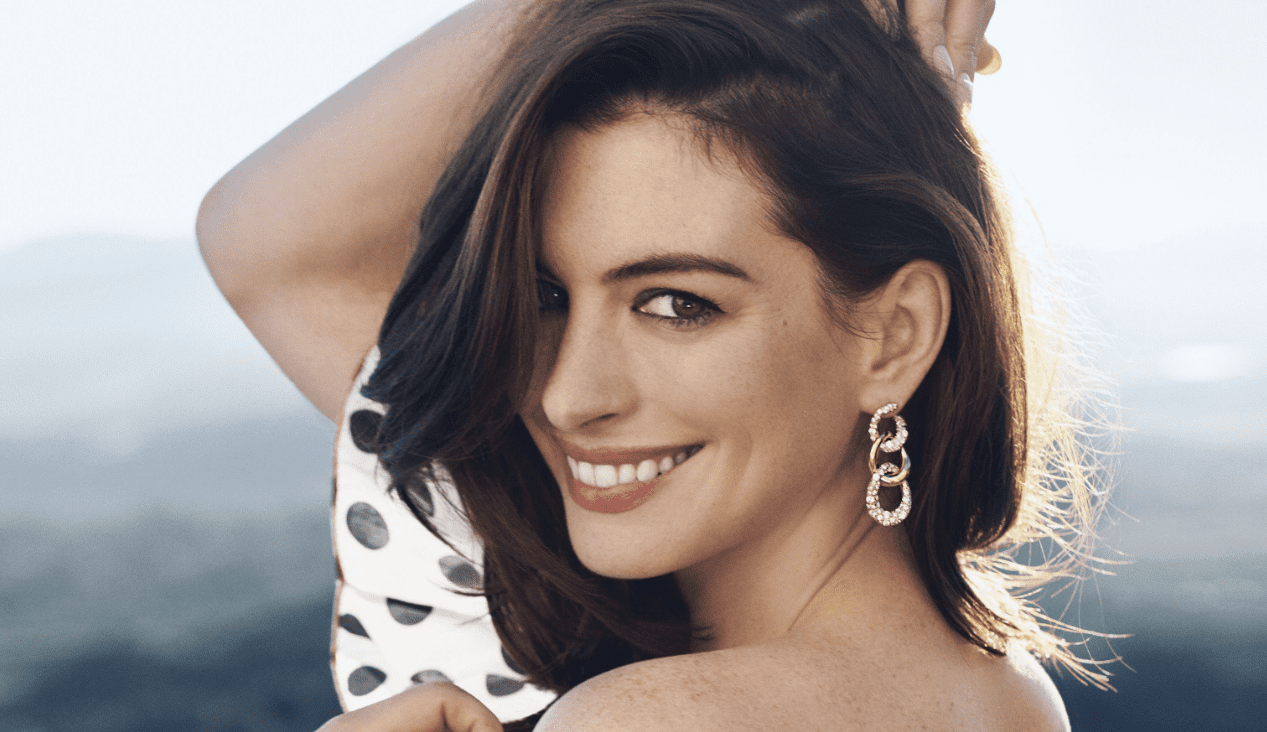
Anne Hathaway is no longer the archetype of early-2000s Hollywood ambition she once embodied. Instead, she stands at a cultural intersection that feels distinctly modern: where fame, motherhood, longevity, and emotional recalibration meet under the unforgiving spotlight of contemporary celebrity. As she returns to the world of The Devil Wears Prada, Hathaway is not simply revisiting a role—she is revisiting an entire mythology built around her.
In an industry obsessed with youth and reinvention, Hathaway’s current chapter feels less like a comeback and more like an evolution. Her reflection on ambition, aging, and emotional balance arrives at a moment when Hollywood itself is re-evaluating what it means to sustain a life in public.
The Myth of “Having It All” Collides With Reality
For Hathaway, the conversation begins not with fame, but with perspective. What once felt like an unbroken ascent through Hollywood now reads as a life lived in two distinct eras. The first was defined by relentless momentum—early stardom, global recognition, and the kind of accelerated adulthood that comes with growing up on screen. The second is quieter, more deliberate, and shaped by motherhood, sobriety, and a conscious withdrawal from the mythology of “having it all.”
That phrase—once central to millennial ambition culture—now feels almost fragile in retrospect. Hathaway reframes it entirely, rejecting the idea of balance as something stable or achievable. Instead, she speaks about “harmony,” a fluid recalibration that allows work and life to coexist without competing for dominance.
It is a subtle but significant shift, one that mirrors a broader cultural fatigue with perfection narratives once sold to women as empowerment.
Returning to Andy Sachs in a Changed Hollywood Landscape
Her return as Andy Sachs in The Devil Wears Prada 2 is more than nostalgia—it is commentary. The original film captured a pre-crisis media world defined by aspiration, hierarchy, and fashion fantasy. Two decades later, that world has fragmented. Print journalism has contracted, digital culture has accelerated, and celebrity itself has become both more accessible and more invasive.
The sequel reflects this transformation. Andy is no longer the wide-eyed assistant navigating Miranda Priestly’s empire; she is a seasoned editor operating in a media ecosystem shaped by layoffs, volatility, and reinvention. Hathaway, meanwhile, occupies a similar space in real life—an actor navigating an industry that no longer resembles the one that made her famous.
Even the production itself reflects this shift. What was once distant and controlled is now visible, immediate, and exposed to constant public scrutiny. Fame, in this environment, is no longer a shield—it is an atmosphere.
The Discipline of Reinvention and the Weight of Visibility
Few actors of her generation have maintained such consistent cultural presence while simultaneously resisting stagnation. Hathaway’s recent body of work reveals an artist in constant physical and emotional recalibration—from intense dance preparation for upcoming roles to physically demanding film sets that test endurance as much as performance.
But beneath the discipline lies something more introspective: a long negotiation with visibility. Hathaway has lived most of her adult life in public view, where even minor moments can become viral events, and where control over narrative is always partial at best.
A simple stumble on set becomes a headline. A reaction becomes analysis. A personality becomes a projection surface. In this sense, her career is not just a filmography—it is a case study in modern celebrity surveillance.
Aging, Authorship, and the Rewriting of Identity
What distinguishes Hathaway’s current phase is not reinvention for its own sake, but authorship. She is increasingly attentive to how she wants to exist within her own life story, rather than within the expectations of others.
Her reflections on aging are neither defensive nor nostalgic. Instead, they feel observational—anchored in the recognition that longevity in Hollywood requires a different kind of intelligence than youth. It demands emotional clarity, selective detachment, and an ability to metabolize public perception without internalizing it.
There is a quiet confidence in her acceptance of change. Not as loss, but as recalibration. Not as decline, but as expansion.
The End of Burnout Glamour
Hathaway’s perspective also arrives at a time when cultural attitudes toward ambition are shifting. The once-celebrated “girlboss” ethos has been replaced by something more complicated: an awareness of burnout disguised as success, and a growing refusal to romanticize exhaustion.
In that context, Hathaway’s emphasis on emotional regulation feels less like personal philosophy and more like cultural commentary. She is part of a generation of public women rewriting the language of success—not as constant elevation, but as sustainability.
Her work ethic remains intact, but its meaning has changed. It is no longer about proving worth through intensity alone. It is about choosing when intensity serves something deeper.
Conclusion: A Star Still Becoming Herself
Anne Hathaway’s evolution is not defined by departure from who she was, but by the integration of everything she has been. The ingénue, the Oscar winner, the internet meme, the working mother, the disciplined performer—all coexist within a more nuanced identity that resists simplification.
In revisiting Andy Sachs, she is also revisiting herself: not as a character frozen in cultural memory, but as a woman continuing to negotiate visibility, ambition, and meaning on her own terms.
Hollywood has always preferred transformation that feels clean and legible. Hathaway offers something more interesting: transformation that is ongoing, imperfect, and fully alive.




Comments are closed.