
Introduction: The Last True Movie Star in an Age of Noise
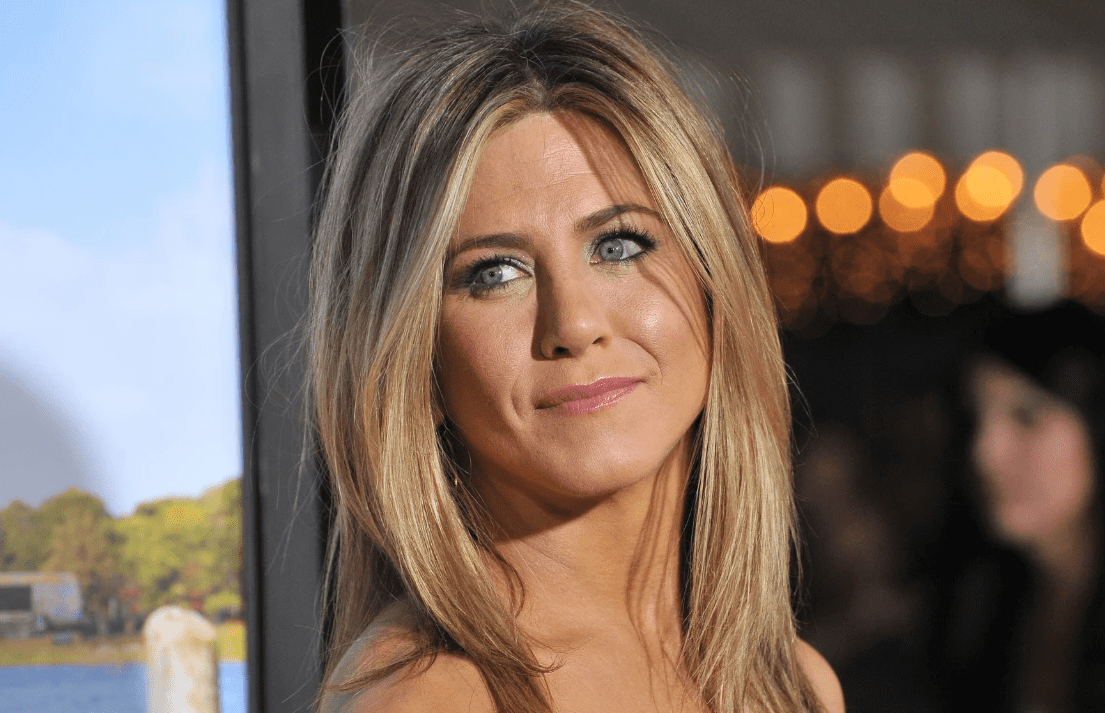
There are celebrities, and then there is Jennifer Aniston—a figure who exists almost outside the modern rules of fame.
In 2026, as Hollywood continues to fracture into algorithms, influencers, and fleeting virality, Aniston remains something rarer: enduring. Not just relevant, but resonant. With the continued success of The Morning Show and a new wave of film and production projects quietly expanding her legacy, she isn’t clinging to visibility—she’s redefining what it looks like to age within it.
And perhaps for the first time in decades, she’s doing it entirely on her own terms.
Fame, Then and Now: A Cultural Shift
Aniston’s rise was forged in a different era—one where stardom was not constant, but curated. As Rachel Green on Friends, she became part of a cultural phenomenon that defined a generation. But what followed was something more complex: a level of global recognition so intense that it blurred the line between public fascination and personal intrusion.
Today, that kind of fame no longer exists in the same way. The industry has splintered. Attention is diluted. And yet, Aniston’s presence still carries weight—not because she demands it, but because it has been earned over time.
There is a quiet irony in this: as celebrity culture becomes louder, she becomes more selective.
The Evolution of Control: From Tabloids to Authorship
For years, Aniston’s narrative was written by others. Headlines speculated about her relationships, her body, her choices—particularly her decision not to have children, which became one of the most persistent and invasive storylines in modern celebrity media.
Now, that narrative has shifted.
In speaking openly about her experience with fertility struggles, IVF, and the emotional toll of public scrutiny, Aniston has reclaimed authorship of her own story. Not as confession, but as correction.
There is no performative vulnerability here. Only clarity.
And in that clarity, she dismantles one of Hollywood’s longest-standing double standards: that a woman’s worth must be measured against traditional expectations of motherhood.
Aging Without Apology
At 57, Aniston represents a new model of aging in Hollywood—one that resists both denial and overexplanation.
She speaks about feeling more grounded, more self-aware, and, perhaps most strikingly, more at ease than in her earlier years. It’s a perspective that challenges a long-held cultural assumption: that youth is the peak.
Instead, Aniston reframes aging as accumulation—of experience, resilience, and emotional intelligence.
In an industry that still struggles with this concept, her presence feels quietly radical.
Work, Legacy, and the Power of Reinvention
While nostalgia continues to fuel interest in Friends, Aniston’s current work tells a different story. Her role in The Morning Show has evolved into one of the most layered performances of her career, allowing her to explore themes of power, media ethics, and identity in a post-#MeToo landscape.
Off-screen, her production company continues to shape projects that reflect her shifting priorities—stories centered on complexity, particularly for women navigating midlife and beyond.
She is no longer just participating in Hollywood. She is helping reshape it.
The Private Self in a Public World
Despite decades in the spotlight, Aniston has maintained something increasingly rare: boundaries.
Her relationship with social media remains cautious, almost reluctant—a stark contrast to a generation that measures relevance in engagement metrics. For her, visibility is not validation.
Instead, she invests in something less visible but more enduring: real-life connections. Long-standing friendships, chosen family, and a carefully cultivated inner circle form the foundation of her world.
It’s a reminder that behind the icon is a person who has spent years learning how to separate identity from perception.
Healing, Forgiveness, and the “Phoenix” Chapter
Perhaps the most compelling aspect of Aniston’s current chapter is not her career, but her perspective.
She speaks openly about forgiveness—of family, of the past, of herself. Not as a performative act, but as a necessary one. Letting go of resentment becomes a form of liberation, a way of moving forward without carrying the weight of what came before.
There is a metaphor she returns to: life as a mosaic. Broken pieces, reassembled into something unexpectedly beautiful.

It’s not a narrative of perfection. It’s a narrative of reconstruction.
Conclusion: Reinvention Without Reinvention
Jennifer Aniston doesn’t need a comeback. She doesn’t need reinvention in the traditional sense. What she offers instead is something far more compelling: continuity with evolution.
She remains recognizable, yet transformed. Familiar, yet deeper. A figure shaped not just by success, but by survival—of scrutiny, expectation, and time itself.
In a culture obsessed with the next new thing, Aniston proves that longevity, when paired with self-awareness, is its own form of power.
And if this chapter has a title, it isn’t about returning.
It’s about rising—again, and differently.





Comments are closed.