

For decades, Sylvester Stallone’s body has been treated as part of the mythology of Rocky: the shoulders, the veins, the impossible leanness, the transformation that made Rocky Balboa look less like a fictional boxer and more like a man who had genuinely lived inside the ring.
But behind one of cinema’s most influential physical transformations was an experience Stallone has described in far less glamorous terms. While preparing for Rocky III, the actor pushed his diet and training to such an extreme that he later said his relationship with food became dangerously distorted, at one point describing himself as “almost bulimic.”
Now, as Stallone approaches the release of his memoir The Steps, those stories carry a different weight. They reveal the less visible cost behind one of Hollywood’s most enduring images of masculinity.
The Body That Became Part of the Character
When Stallone created Rocky Balboa, physicality was never merely cosmetic. The character’s body was part of the storytelling.
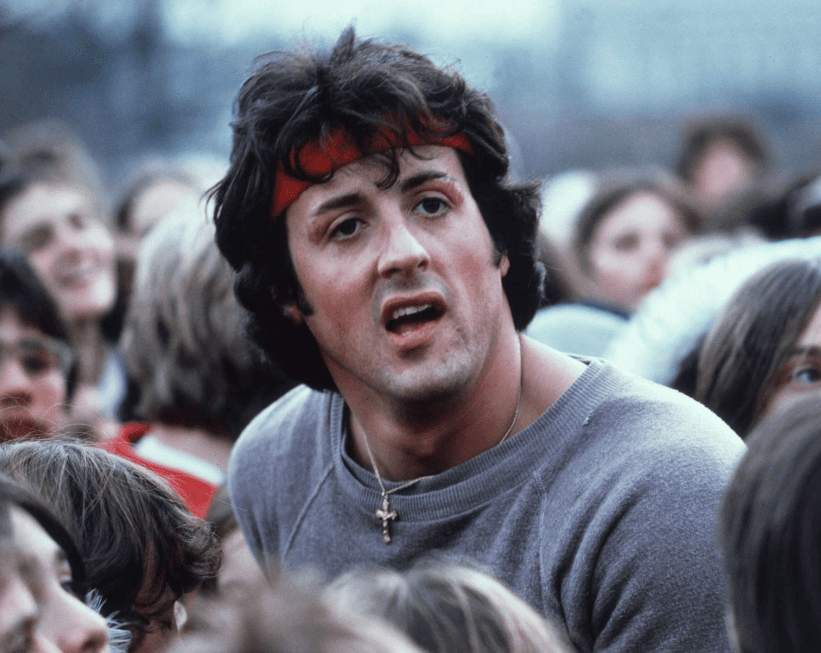
Rocky had to look capable of surviving punishment. His transformation had to communicate discipline, desperation and the brutal demands of professional boxing before he even entered the ring. Over the course of the franchise, Stallone repeatedly altered his body to match different versions of Rocky, turning his own physique into one of the defining visual signatures of the films.
By Rocky III, however, the pursuit had become particularly extreme.
In a 2005 interview with Larry King, Stallone recalled adopting a radically restrictive diet in an effort to achieve an exceptionally low body-fat percentage. He said he reached roughly 2.4 percent body fat and experienced severe physical and cognitive effects, describing himself as barely functioning.
The image of the perfectly conditioned action star therefore conceals a more complicated reality: the body audiences admired was being produced through methods Stallone himself later characterized as dangerous.
When Fitness Became Obsession
The culture surrounding Hollywood physiques has changed dramatically since the early Rocky films, but Stallone’s story remains strikingly contemporary.
Modern entertainment routinely presents extreme physical transformations as evidence of dedication. Actors gain and lose substantial amounts of weight, dramatically increase muscle mass or achieve extraordinarily low body-fat levels for roles, while interviews and social media can turn the process into aspirational content.
Stallone’s recollection offers an uncomfortable counterpoint.
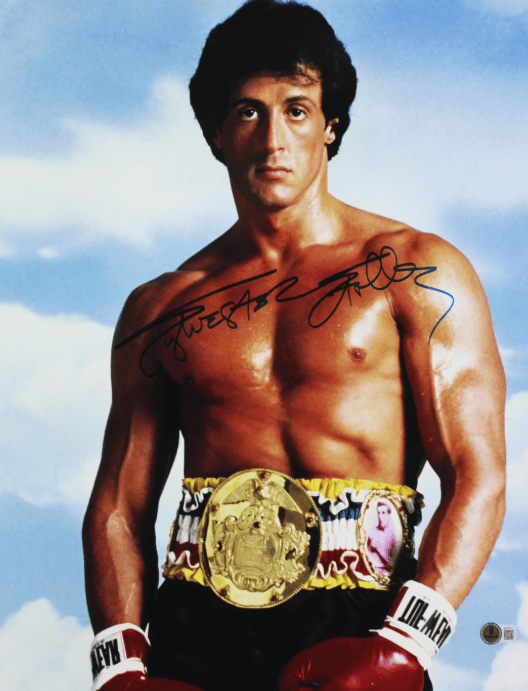
He described reaching a point where he no longer wanted food and said the restrictive approach began affecting his mind as well as his body. He ultimately recognized that his dieting had developed into a dangerous pattern.
That admission is particularly significant because it comes from an actor whose career helped establish the modern action-star physique. The Rocky body became an ideal; Stallone’s own experience demonstrates that an ideal can become destructive when pushed beyond the limits of ordinary human physiology.
The Rocky Transformation Was Never Just About Muscles
There is an important distinction between physical preparation for a role and the mythology that grows around it.
Stallone’s transformation became part of the Rocky legend because it appeared to embody the franchise’s central philosophy: work harder, endure more, refuse to quit. But the physical preparation also demonstrates the darker side of that message.
Rocky’s fictional determination is inspirational because the character’s suffering ultimately has meaning. Stallone’s real body, however, could not operate according to a screenplay.
Years later, when preparing for Rocky Balboa, Stallone again subjected himself to an extraordinarily demanding regimen. He described training five days a week and boxing for several hours a day, while deliberately manipulating his diet to change his weight and conditioning. The process was intense enough that he acknowledged it was not something he would recommend.
The distinction matters. Cinema can make physical transformation look almost magical. The human body is considerably less forgiving.
Hollywood’s Complicated Relationship With the Male Body
Stallone’s legacy sits at an interesting intersection of cinema, bodybuilding and changing ideas about masculinity.
Before Rocky, leading men certainly had muscular physiques, but Stallone helped make extreme conditioning central to the identity of the modern action hero. His influence can be traced through the muscular silhouettes of the Rambo films, the action cinema that followed and eventually the contemporary expectation that actors should transform their bodies almost as dramatically as their characters.
Yet there is an irony in the longevity of that image.
The ideal of the action hero suggests total control: control over pain, appetite, fatigue and the physical self. Stallone’s own account reveals the opposite. The harder he tried to control his body, the more that control began to break down.
That tension makes the story more revealing than another behind-the-scenes account of Hollywood training. It exposes the psychological machinery underneath the spectacle.
A Different Kind of Legacy
At 80, Stallone remains one of the clearest embodiments of the action-film era he helped define. His career has been built around characters who absorb punishment and continue moving forward, from Rocky Balboa to John Rambo.
But perhaps the more interesting legacy is not the number of pounds lifted, calories burned or inches gained and lost for a role.
It is the willingness, decades later, to acknowledge that some of those transformations came with consequences.
Stallone’s Rocky physique remains an icon of popular culture. The lesson behind it, however, is considerably less glamorous. The body that helped create one of cinema’s great symbols of perseverance also had limits, and even the ultimate Hollywood tough guy eventually had to recognize them.
That may be the most human chapter of the Rocky story: not that Stallone pushed himself further than almost anyone else, but that he eventually understood that endurance without boundaries is not strength. Sometimes, knowing where to stop is the harder fight.












Comments are closed.