
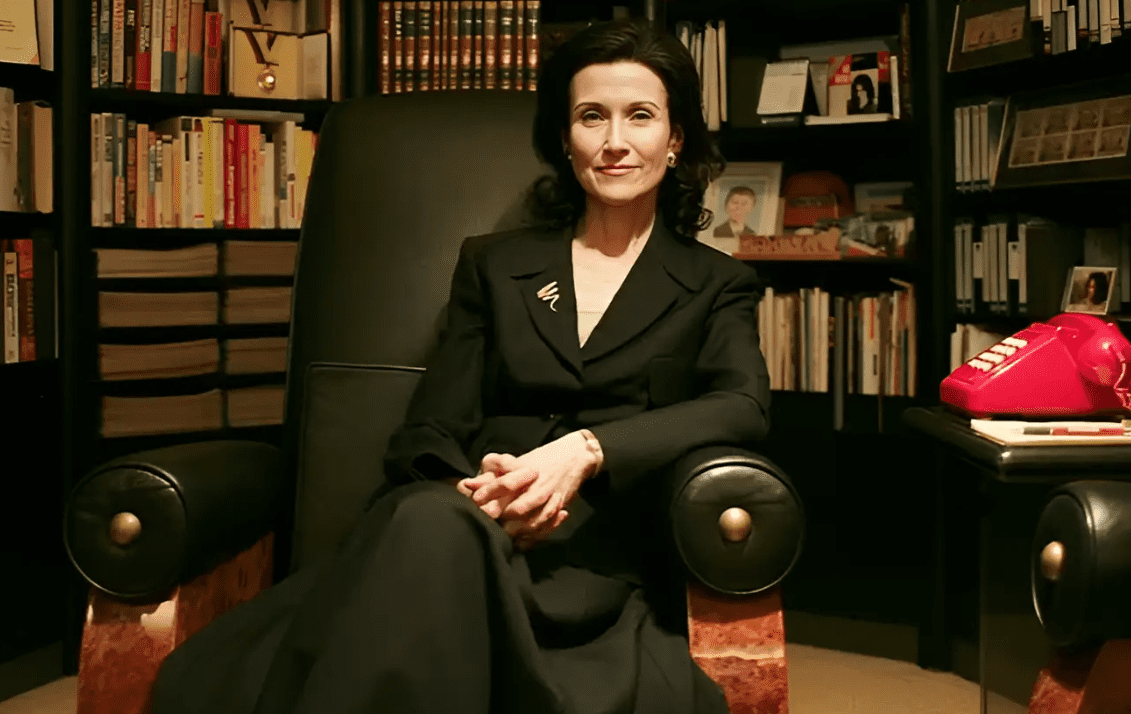

Marilyn Vos Savant is not just a record-breaking intellect; she is a modern icon whose IQ has been measured higher than Albert Einstein’s. From her extraordinary cognitive abilities to her groundbreaking “Ask Marilyn” columns, Vos Savant challenged conventional wisdom, sparked nationwide debate, and redefined what it means to be a genius in the public eye. Her life story is a study in brilliance, resilience, and the power of thinking differently.
Marilyn Vos Savant has captivated the world not just for her record-breaking IQ, but for the way she challenged conventional thinking. Known as the woman who solved problems others couldn’t, her life and career provide a fascinating case study in intellect, persistence, and societal perception. From her early achievements to her famous “Ask Marilyn” column, Vos Savant remains a symbol of critical thinking in a world often resistant to unconventional solutions.
Early Life and Exceptional Intellect
Born Marilyn Mach on August 11, 1946, in St. Louis, Missouri, Vos Savant exhibited extraordinary cognitive abilities from a young age. By ten, she had already read the entire Encyclopedia Britannica and memorized entire books, demonstrating an early aptitude for learning that far surpassed her peers.
Despite this intellectual gift, her path was not traditional. She briefly attended Washington University in St. Louis to study philosophy but left after two years to support her family business. This decision highlights a recurring theme in her life: intelligence alone does not dictate one’s journey, and practical considerations often shape even the most gifted minds.
Vos Savant’s family background also played a role in her intellectual development. She descends from Italian and Czech ancestry, with her maternal grandparents’ surname “Savant” literally meaning “someone of learning.” Her upbringing fostered curiosity and encouraged independent thought, foundational traits that would later define her career.
Guinness World Records and the Monty Hall Problem
In 1985, Marilyn Vos Savant was listed in the Guinness Book of World Records as having the highest recorded IQ, reported at 228. This brought her immediate fame and scrutiny. While the category has since been retired due to the limitations of IQ testing, the recognition placed Vos Savant in the public eye as a living example of exceptional intelligence.
Her reputation for intellectual problem-solving reached a peak in 1990 with the Monty Hall problem. This probability puzzle, based on the game show Let’s Make a Deal, asks contestants to choose between three doors, behind one of which is a prize. After selecting a door, the host reveals a goat behind one of the remaining doors and offers the contestant the chance to switch.
Vos Savant’s advice: switching doors increases your chance of winning to 2/3.
Her answer was initially met with widespread disbelief. Thousands, including mathematicians, argued that the odds were 50/50. Vos Savant held her ground, explaining that many people fail to consider conditional probability and how the host’s actions affect outcomes. Subsequent simulations, including those conducted by MythBusters, confirmed her reasoning.
The Monty Hall problem illustrates not only her mastery of probability theory but also her role as an educator, teaching readers to challenge assumptions and think critically.
Controversial Columns and Logical Challenges
Vos Savant became a household name through her Ask Marilyn column in Parade Magazine, which began in 1986. She tackled puzzles, logic problems, and questions spanning mathematics, philosophy, and practical reasoning. Many of her columns sparked heated debate, reinforcing her reputation as someone unafraid to confront intellectual controversy.
One notable example is the “Two Boys” problem, a probability puzzle about families with two children. Readers often incorrectly assumed a 50/50 chance for various outcomes. Vos Savant clarified the solution, demonstrating subtle distinctions in probability logic and highlighting common errors in human reasoning.
Her engagement with these problems reflects her broader philosophy: intelligence is not just about answers, but about how we approach questions. By encouraging critical thinking, she challenged both readers and the broader public to examine assumptions carefully.
The Cost of Genius
High intelligence often comes with societal challenges. Vos Savant has spoken about feelings of isolation and the difficulties of connecting with people who think differently. Despite her fame, she frequently found herself without peers who could match her reasoning, stating, “Whenever I need answers, there’s no one to turn to.”
This aspect of her life emphasizes an important truth: intellectual brilliance is not always accompanied by social ease. Her experiences highlight the emotional and psychological dimensions of genius, reminding us that intelligence can be both a gift and a burden.
Contributions Beyond Columns
Beyond her writing, Vos Savant has contributed to education and high-IQ communities. She has held memberships with Mensa International and the Mega Society and served on boards promoting economic education and giftedness. Her advocacy underscores the value of nurturing intellectual potential and supporting critical thinking in society.
Vos Savant also authored several books, including Ask Marilyn, More Marilyn, and The Power of Logical Thinking. These works compile her columns and expand on her approach to problem-solving, blending entertainment with education and offering readers tools to think more clearly in daily life.
Lessons from Marilyn Vos Savant
Marilyn Vos Savant’s life provides valuable lessons for anyone interested in critical thinking, problem-solving, or the broader role of intelligence in society:
- Challenge assumptions: Many people initially rejected her Monty Hall solution. Persistence in logic can overturn common misconceptions.
- Embrace complexity: Problems often have layers that are not immediately apparent. Simplistic approaches may fail to capture reality.
- Value education and curiosity: Vos Savant’s intellectual growth was fueled by self-directed learning, demonstrating the importance of lifelong curiosity.
- Balance intellect with practicality: Leaving university to support her family shows that intelligence alone does not dictate life choices.
Her story reminds us that genius is not just measured by raw IQ but by the ability to communicate ideas, influence thought, and inspire change.
The Legacy of a Modern Icon
Marilyn Vos Savant remains a prominent figure in both popular and academic discourse. Her work demonstrates that intellectual rigor and public engagement are not mutually exclusive. By addressing challenging problems in accessible ways, she has helped cultivate a culture that values reasoning, analysis, and skepticism.
In a world increasingly shaped by information overload and simplified thinking, Vos Savant’s example serves as a beacon for thoughtful analysis. Her approach encourages readers to question assumptions, explore alternatives, and embrace the complexity of the world around them.
Conclusion
Marilyn Vos Savant is more than a record-breaking IQ holder. She is an educator, a columnist, and a thinker who challenges conventional wisdom. From the Monty Hall problem to her influential columns and books, she has demonstrated how intellect can inspire both fascination and debate. Her legacy is a testament to the power of curiosity, critical thinking, and perseverance.
As we navigate increasingly complex societal and personal decisions, Vos Savant’s example reminds us: solutions are not always obvious, and sometimes the smartest choice is to rethink the doors we thought we already knew.









Comments are closed.