
Introduction: From Critical Darling to Cultural Phenomenon
For decades, Meryl Streep was synonymous with excellence. Her résumé — filled with prestige dramas and emotionally complex roles — earned universal respect, but not mass obsession. She was admired, not quoted. Celebrated, not memed.
That distinction matters.
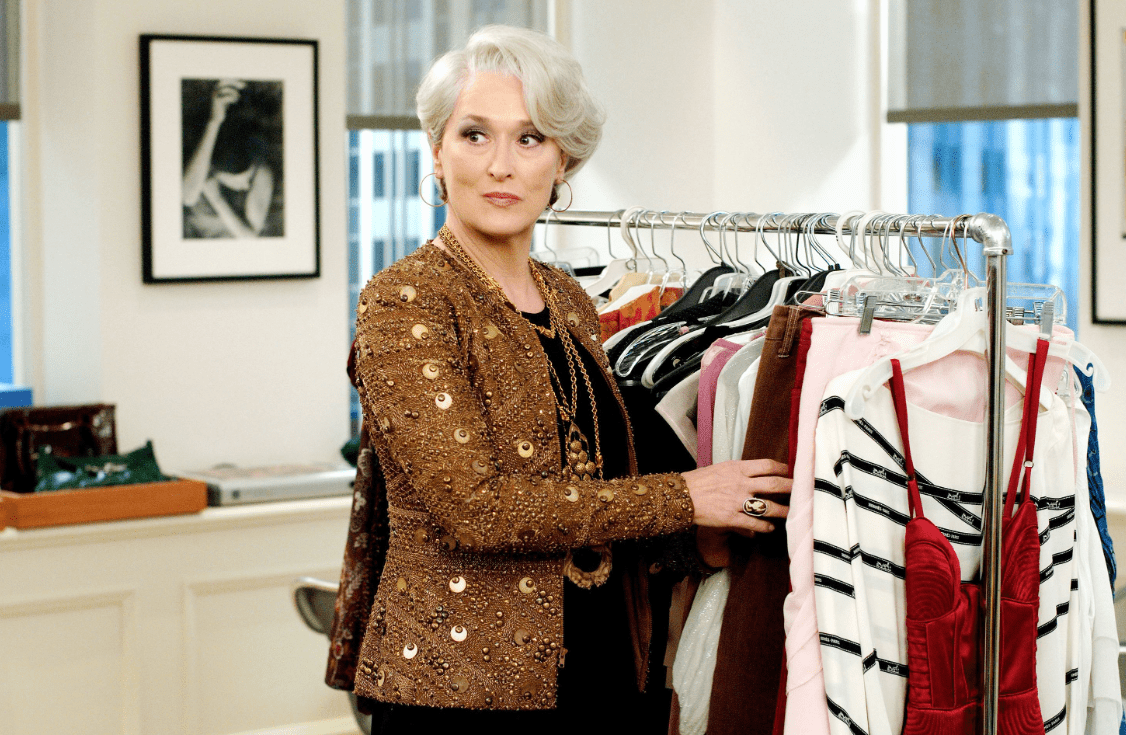
Then came 2006 — and with it, The Devil Wears Prada. In a single, meticulously constructed introduction, Streep redefined her public image and secured a permanent place in popular culture. Nearly twenty years later, Miranda Priestly remains one of the most recognizable characters in modern cinema.
The Power of a Perfect Entrance
Icons are often born in moments — not entire films, but seconds that crystallize everything a character represents. Miranda Priestly’s entrance is one of those rare cinematic moments.
Before she even appears on screen, her presence is felt. Offices freeze. Assistants panic. The atmosphere shifts. When Miranda finally arrives, she doesn’t announce herself — she commands the room through silence, posture, and precision.
This was no accident. Director David Frankel crafted an entrance that functioned like a coronation. By the time Miranda removes her coat and sunglasses, the hierarchy is established — and the audience understands exactly who holds the power.
Minimalism as Authority
What makes Miranda Priestly iconic isn’t volume or cruelty — it’s restraint.
Streep famously avoided playing Miranda as overtly villainous. Instead, she leaned into understatement: a calm voice, clipped sentences, and razor-sharp timing. Her now-legendary line — “That’s all.” — became a cultural catchphrase precisely because it was delivered without effort.
In an era obsessed with excess, Miranda’s quiet dominance felt radical. It redefined what authority looked like on screen — especially for women in leadership roles.
Fashion, Character, and Cultural Timing
Miranda Priestly arrived at a pivotal cultural moment. The mid-2000s marked a shift in how fashion, media, and power intersected. Glossy magazines still ruled, but their mystique was beginning to crack.
The film captured that tension perfectly. Miranda embodied both aspiration and fear — a woman who had “made it” at the cost of warmth, softness, and approval. That complexity resonated deeply, particularly with audiences navigating ambition in a rapidly changing professional world.
By 2026 standards, Miranda remains astonishingly modern — a blueprint for every stylish, emotionally guarded authority figure that followed.
From Character to Cultural Blueprint
Miranda Priestly didn’t stay confined to one film.
Her DNA can be seen across television, fashion media, drag culture, and internet discourse. Entire archetypes were born from her presence — the cool, untouchable editor; the powerful woman who doesn’t explain herself; the boss everyone fears but secretly wants to become.
Crucially, this role reshaped Streep’s career. Post-Devil Wears Prada, she didn’t abandon prestige — she expanded into mainstream cultural relevance, embracing musical comedies, box-office hits, and roles that connected her with younger generations.
Respect turned into recognition. Admiration turned into devotion.
Why Miranda Still Matters in 2026
Nearly two decades later, Miranda Priestly is still quoted, impersonated, analyzed, and debated. She has outlived trends, platforms, and even the industry she was meant to critique.
That longevity is the true mark of an icon.
As audiences anticipate the next chapter of The Devil Wears Prada universe, one truth remains unchanged: Miranda isn’t just a character — she’s a cultural language. And Meryl Streep, through discipline, intelligence, and absolute control, is the only person who could have made her eternal.
Five minutes were all it took.



Comments are closed.