
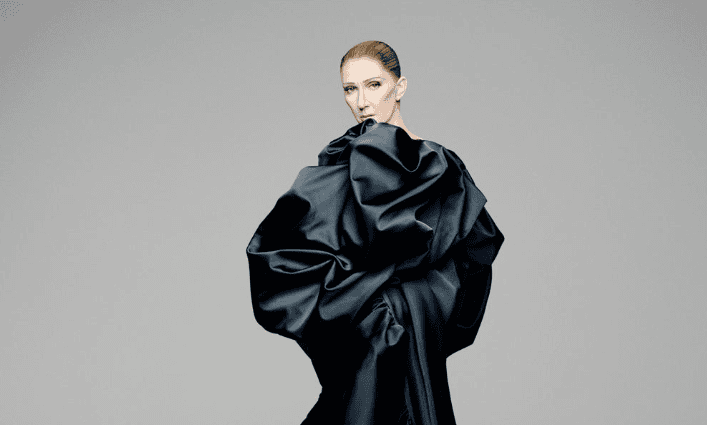
Music, resilience and the enduring power of an extraordinary voice.
Some voices become attached to songs. Others become attached to entire chapters of our lives. Céline Dion belongs to the latter. For decades, the Canadian singer has transformed love, heartbreak, longing and hope into performances that reach far beyond language, turning personal emotion into a shared cultural experience.
In September 2026, Dion enters another defining chapter. Her long-awaited return to the concert stage in Paris marks a significant moment in a career shaped by extraordinary success, personal loss, health challenges and an unwavering relationship with music. After years away from full-scale live performances, her presence on stage represents more than a comeback. It is a reminder of what makes an artist endure long after the charts, trends and cultural conversations have moved on.
For Iconic Times, Céline Dion is September’s Icon of the Month: an artist whose legacy continues to evolve, whose voice remains unmistakable, and whose influence reaches generations of listeners around the world.
From a Small Town in Québec to the World Stage
Born on March 30, 1968, in Charlemagne, Québec, Céline Dion grew up in a large family where music was part of everyday life. The youngest of fourteen children, she began singing at an early age, developing a voice that would eventually carry her from French-language music into the centre of the international pop industry.
Her professional journey began in the French-speaking music world, where her vocal ability and emotional delivery quickly attracted attention. As a teenager, she was already winning competitions and building a reputation as a rising performer. These early years established the foundation of her artistry: precise vocal control, a remarkable range and an ability to communicate emotion with striking clarity.
Dion’s breakthrough beyond Québec came through her work in French-language music and her growing recognition across Europe. Rather than abandoning her linguistic roots as her international career expanded, she continued to record in French, building two interconnected musical identities that would become central to her legacy.
In 1990, she released Unison, her first English-language album, opening the door to a broader North American audience. The record helped establish her as a rising pop vocalist, while subsequent releases would transform that early promise into global recognition.
The Songs That Defined a Generation
There are artists whose careers are remembered through a collection of hits, and then there are artists whose songs become cultural landmarks. Dion’s catalogue belongs firmly in the second category.
Her performance of Beauty and the Beast, recorded with Peabo Bryson for Disney’s animated classic, brought her voice to a new international audience. The song won both an Academy Award and a Grammy Award, introducing millions of listeners to the emotional precision and cinematic scale that would become hallmarks of her work.
Then came The Power of Love, Because You Loved Me, It’s All Coming Back to Me Now and, perhaps most enduringly, My Heart Will Go On, the theme song for Titanic. Released in 1997, the latter became inseparable from one of cinema’s most recognisable love stories, transforming Dion’s voice into a defining sound of late-1990s popular culture.
The success of My Heart Will Go On was not simply a matter of chart performance. The song demonstrated how a vocalist could become part of a film’s emotional architecture, giving audiences a musical memory that continued long after the final scene. Its sweeping arrangement, controlled crescendo and Dion’s soaring delivery made it one of the most recognisable ballads in modern popular music.
Yet her artistic identity has never depended on English-language hits alone. Albums such as D’eux and S’il suffisait d’aimer established her as a major figure in French-language music. Her ability to move between languages without losing the emotional character of her performances is one of the defining features of her career.
The result is a catalogue that crosses generations, borders and musical markets. Her songs continue to appear at weddings, celebrations, memorials and personal milestones, often carrying meanings that extend well beyond the original circumstances in which they were written.
The Power of the Live Performance

Dion’s career has been defined not only by recordings, but by her ability to bring songs to life in front of an audience. Her live performances combine technical discipline with theatrical scale, moving between quiet vulnerability and the kind of vocal intensity that fills an arena.
Her Las Vegas residencies were particularly important to this legacy. Rather than relying exclusively on international touring, she helped demonstrate how a long-running concert production could become a destination in itself, attracting audiences from around the world. The format also gave her room to refine her stage presence and build a direct, lasting relationship with her fans.
The scale of her influence became especially visible when she performed Édith Piaf’s Hymne à l’amour from the Eiffel Tower during the closing ceremony of the Paris 2024 Olympic Games. The performance placed Dion within a wider cultural moment, connecting her voice with the history, symbolism and spectacle of the host city. It also marked a significant public appearance following her disclosure of stiff-person syndrome.
The performance was a reminder that Dion’s artistry extends beyond a particular genre or generation. Her voice can carry the intimacy of a personal confession while also serving as the centrepiece of an international event.
A Different Kind of Strength
Behind the polished performances and extraordinary commercial success, Dion’s life has also involved profound personal challenges. The death of her husband and longtime manager, René Angélil, in 2016 marked a deeply personal turning point. Their relationship had been closely intertwined with her career, from her earliest professional years to her emergence as an international star.
In December 2022, Dion publicly revealed that she had been diagnosed with stiff-person syndrome, a rare neurological disorder that can cause muscle stiffness and painful spasms. The condition forced her to postpone and cancel performances, including dates on her Courage world tour, while she focused on managing her health.
For an artist whose career depends on the complex coordination of breath, movement and vocal control, the diagnosis introduced profound uncertainty. It also brought a different dimension to the way audiences understood her work.
Dion subsequently shared more of her experience in the 2024 documentary I Am: Céline Dion, offering a candid look at the physical and emotional realities of living with the condition. The film moved beyond the familiar image of the global superstar, revealing the determination required to continue pursuing a life in music while confronting an unpredictable illness.
Her story should not be reduced to a narrative of overcoming adversity. Living with a chronic condition is not a simple journey with a guaranteed resolution, and a return to performing does not mean that every challenge has disappeared. What makes this chapter meaningful is the determination to continue creating within new circumstances, without pretending that the difficulties do not exist.
That distinction matters. Dion’s legacy is not only about extraordinary vocal ability or commercial success. It is also about allowing audiences to see the person behind the performance.
Paris 2026: A Return Years in the Making

September 12, 2026, marked a milestone in Dion’s career. She returned to the concert stage in Paris for the opening night of her 26-show residency at Plenitude Arena, performing a full concert for the first time in more than six years. The response was immediate, with a sold-out audience welcoming her back.
The opening night brought together the different chapters of her musical identity. French-language classics sat alongside English-language hits, allowing the audience to revisit the songs that had defined her international career while recognising the repertoire that had established her earliest success.
The setlist included Because You Loved Me, The Power of Love, My Heart Will Go On, It’s All Coming Back to Me Now and All by Myself, alongside French favourites such as Pour que tu m’aimes encore and S’il suffisait d’aimer. She also performed Dansons, her 2026 single written by longtime collaborator Jean-Jacques Goldman.
The evening was not simply an exercise in nostalgia. It presented an artist returning to a familiar stage under different circumstances, with a catalogue that had continued to resonate during her absence. The emotion surrounding the opening performance reflected the significance of the moment for both Dion and her audience.
The residency’s expansion into May 2027, with ten additional dates announced following strong demand, further demonstrated the scale of interest in her return.
Paris has long held a special place in Dion’s professional story, particularly through her French-language recordings and performances. Returning to the city offered a fitting setting for this new chapter: a place where her two musical identities, French and English, could share the same stage.
New Music, New Chapters
A legacy can be celebrated without remaining frozen in the past. In 2026, Dion has continued to release new music, showing that her artistic identity extends beyond the familiar songs that made her famous.
In April, she released Dansons, a French-language track written by Jean-Jacques Goldman, the songwriter behind several important recordings in her catalogue. In July, she followed it with Bonjour, Pardon, Merci, written by French singer-songwriter Ycare.
The two releases connect different aspects of Dion’s artistic history. Goldman’s return brings a familiar creative partnership back into focus, while the collaboration with Ycare introduces a different songwriting voice. Both songs maintain a connection to French-language music, a central part of her career that has sometimes received less attention in international discussions of her global success.
Their arrival during the year of her Paris residency gives 2026 a broader significance. This is not solely a return to old favourites or a celebration of past achievements. It is also a period of renewed creative activity, with new recordings sitting alongside the songs that audiences have carried with them for decades.
For an artist with such an established catalogue, new material inevitably exists in conversation with the past. The challenge is not to recreate the conditions of an earlier era, but to find a meaningful place within a career that has already spanned multiple generations of popular music.
Dion’s current chapter offers precisely that opportunity.
The Enduring Influence of Céline Dion
Céline Dion’s influence is difficult to measure through awards, record sales or chart positions alone. Her greatest achievement may be the way her music has become woven into the emotional lives of people who might otherwise have little in common.
Her songs cross linguistic and cultural boundaries. A listener may discover her through Titanic, grow up hearing The Power of Love, or find a personal connection in a French-language ballad. Each route leads to a different part of the same artistic identity: a performer capable of making enormous emotions feel immediate and personal.
Dion has also helped sustain the place of the traditional power ballad in an industry that continually reinvents its sound. At a time when musical trends can change overnight, her repertoire demonstrates the continuing appeal of melody, vocal precision and performances built around emotional release.
Her influence is visible in the expectations audiences bring to live singing, in the enduring popularity of cinematic ballads and in the way vocal ability remains central to discussions of great pop performers. Her career has also shown how an artist can maintain an international audience while continuing to work in more than one language.
Perhaps most importantly, Dion’s legacy has never depended on appearing untouchable. Her career has included extraordinary triumphs, personal grief, periods of uncertainty and the need to adapt. That complexity makes her story more human, not less remarkable.
Beyond the Spotlight: The Woman Behind the Voice
The public image of Céline Dion has often been defined by glamour, elaborate gowns, dramatic performances and a voice capable of filling the largest venues. Yet her appeal has also grown through moments that reveal a more playful, candid and self-aware personality.
Whether sharing humour in interviews, embracing unconventional fashion or speaking openly about the realities of her life, Dion has shown a willingness to exist beyond the expectations attached to a global superstar. Her public persona combines theatricality with a disarming directness, allowing audiences to connect with both the performer and the individual.
Fashion has become another part of that expression. In recent years, her appearances have attracted attention for their bold silhouettes, experimental styling and confident departure from conventional expectations of how a woman of her age should dress. Rather than treating style as a separate aspect of her identity, Dion has increasingly used it as another form of performance.
That evolution reflects a wider truth about longevity in popular culture. An icon is not someone who remains unchanged. An icon is someone whose identity continues to hold meaning as the world around them changes.
Dion’s career has allowed her to occupy multiple roles: the young French-language prodigy, the international pop phenomenon, the Las Vegas headliner, the grieving partner, the mother, the artist living with a serious neurological condition and, now, the performer returning to the stage.
Each chapter adds complexity to the story without erasing what came before.
Why Céline Dion Is September 2026’s Icon of the Month
Céline Dion’s return to the stage makes September 2026 a meaningful moment to revisit her legacy. Yet the significance of this recognition goes beyond a concert residency or the renewed attention surrounding a familiar name.
Her career offers a compelling example of what happens when extraordinary technical ability meets emotional connection. She has sung songs that became global cultural landmarks, maintained a lasting relationship with French-language music and built a body of work that continues to find new audiences.
Her story also invites a more nuanced understanding of resilience. Strength does not always mean returning to the exact life that existed before a difficult experience. Sometimes it means finding a new way forward, accepting uncertainty and continuing to pursue what matters.
Dion’s Paris performances do not erase the challenges she has faced, nor do they guarantee what the future will bring. They do, however, represent a significant moment in an ongoing artistic journey, one in which the desire to sing remains central.
For audiences who have followed her for decades, her music carries memories of different eras and personal milestones. For younger listeners, her catalogue offers an introduction to a performer whose voice helped shape the sound of modern pop balladry.
And for the music industry, her career remains a reminder that lasting influence cannot be manufactured through a single viral moment. It develops through years of work, a recognisable artistic identity and the ability to create something that people return to long after its release.
Céline Dion has spent decades giving a voice to love, heartbreak, hope and longing. In September 2026, as she steps into another chapter of her remarkable career, her legacy feels less like a finished story than a living one.
The voice remains. The music endures. And the legacy continues.




Comments are closed.