


Dark imagination, unforgettable characters and the extraordinary art of seeing beauty in the unusual.
Few filmmakers have created a visual world as instantly recognisable as Tim Burton. With his gothic imagination, eccentric characters, haunting landscapes and distinctive sense of humour, the American director has spent decades challenging conventional ideas of beauty, storytelling and cinema. His films invite audiences into strange worlds where outsiders become heroes, monsters have feelings and the unusual often proves more human than the ordinary.
From Edward Scissorhands and Beetlejuice to The Nightmare Before Christmas, Corpse Bride and Netflix’s Wednesday, Burton has built a creative universe that extends far beyond the cinema screen. His influence can be seen in fashion, animation, popular culture, visual art and the way generations of audiences have embraced characters who never quite fit in.
In October 2026, as Halloween brings gothic imagery, supernatural stories and dark fantasy back into the cultural spotlight, Tim Burton feels like a particularly fitting choice for Iconic Times’ Icon of the Month. His work has become synonymous with the season, but his cultural significance reaches much further than pumpkins, ghosts and haunted houses.
For Iconic Times, Tim Burton is October’s Icon of the Month: a filmmaker whose imagination has transformed the strange into something beautiful and whose unmistakable artistic identity continues to inspire audiences around the world.
From Burbank to Hollywood: The Making of an Unconventional Artist
Born on August 25, 1958, in Burbank, California, Timothy Walter Burton grew up with an interest in drawing, animation, monsters and classic horror films. While other children were drawn to conventional entertainment, Burton found inspiration in the darker corners of cinema, particularly the work of legendary horror actor Vincent Price and the imaginative creatures of classic monster movies.
His childhood fascination with stop-motion animation and illustration became the foundation of a creative career that would eventually redefine modern fantasy filmmaking.
Burton studied animation at the California Institute of the Arts, commonly known as CalArts. His talent attracted the attention of Disney, where he began working as an animator in the early 1980s.
However, his artistic sensibilities did not always fit comfortably within the studio’s traditional approach to animation. Burton preferred unusual characters, unconventional designs and stories that explored the emotional lives of outsiders.
His early short films, including Vincent (1982) and Frankenweenie (1984), offered an introduction to the distinctive style that would later become his trademark. Both explored childhood imagination, loneliness and the fascination with the macabre.
Rather than treating darkness as something frightening, Burton used it as a creative language through which he could explore identity, imagination and belonging.
The Films That Defined a Generation
Tim Burton’s career is filled with films that have become important landmarks in popular culture. His ability to combine gothic imagery, dark comedy, fantasy and emotional storytelling has allowed him to develop a filmography unlike almost any other director.
Beetlejuice: A Gothic Comedy Classic
Beetlejuice (1988) helped establish Burton as one of Hollywood’s most original creative voices.
The supernatural comedy follows a recently deceased couple who attempt to reclaim their home from its new occupants by calling upon an unpredictable spirit known as Beetlejuice. Michael Keaton’s energetic performance, combined with the film’s bizarre visual effects and unconventional humour, created an entirely new approach to the haunted-house genre.
The film demonstrated Burton’s ability to make the macabre entertaining without losing its darker edge. Its distinctive production design, eccentric characters and memorable imagery quickly established it as a cult favourite.
The world of Beetlejuice eventually returned to cinemas with Beetlejuice Beetlejuice in 2024, bringing the director’s supernatural universe to a new generation while reuniting audiences with familiar characters.
Batman: Reinventing the Dark Knight
In 1989, Burton took on one of the most recognisable superheroes in the world with Batman.
Starring Michael Keaton as Bruce Wayne and Jack Nicholson as the Joker, the film presented Gotham City as a dark, atmospheric metropolis filled with dramatic architecture, crime and psychological tension.
At the time, superhero films had not yet become the dominant force they are today. Burton’s interpretation helped demonstrate that comic-book characters could support darker, more visually ambitious cinematic storytelling.
He returned to the character in Batman Returns (1992), introducing audiences to memorable performances from Michelle Pfeiffer as Catwoman and Danny DeVito as the Penguin.
The two films remain important entries in the history of superhero cinema, particularly for their distinctive visual identity and willingness to embrace the darker aspects of the Batman universe.
Edward Scissorhands: The Beauty of Being Different
For many audiences, Edward Scissorhands (1990) remains the definitive Tim Burton film.
Starring Johnny Depp as the gentle artificial man with scissors instead of hands, the film explores isolation, acceptance, prejudice and the difficulties of living in a society that struggles to understand difference.
Its contrast between Edward’s dark, gothic appearance and the brightly coloured suburban neighbourhood around him captures one of Burton’s most enduring themes: the outsider is not necessarily the frightening one.
Beneath the fantasy lies a deeply human story about loneliness and the desire to belong.
The film also established a significant creative partnership between Burton and Depp, who would collaborate on several projects over the following decades.
Edward became one of the most recognisable characters in Burton’s filmography, representing the emotional heart of a director often associated with darkness and eccentricity.
The Tim Burton Aesthetic: A World of Beautiful Darkness
One of the reasons Tim Burton has remained such an influential filmmaker is his unmistakable visual language.
His films frequently feature exaggerated proportions, twisted architecture, pale characters, dramatic shadows, unusual costumes and landscapes that appear to exist somewhere between dreams and nightmares.
Black and white imagery often sits alongside unexpected bursts of colour. Meanwhile, ordinary environments become strange through unusual camera angles, theatrical lighting and imaginative production design.
His visual identity draws inspiration from several creative traditions, including German Expressionist cinema, gothic literature, vintage horror films, stop-motion animation and classic fairy tales.
However, Burton’s work is not simply about creating dark images. His aesthetic often serves a deeper narrative purpose.
The strange houses, exaggerated characters and unusual surroundings reflect the emotional experiences of people who feel disconnected from the world around them. In Burton’s universe, visual difference frequently becomes a symbol of individuality.
Why Gothic Imagery Works So Well in His Films
Burton’s gothic style has become particularly associated with Halloween, but its appeal extends beyond seasonal entertainment.
It allows him to explore themes that conventional storytelling sometimes struggles to express:
- Individuality: Characters who look different often challenge society’s expectations.
- Isolation: Unusual settings reflect the loneliness experienced by outsiders.
- Identity: Costumes, appearances and transformations reveal deeper emotional conflicts.
- Mortality: Death and the supernatural become opportunities to examine love, memory and human connection.
- Dark humour: Comedy creates an unexpected balance between disturbing imagery and emotional warmth.
This combination explains why his films appeal to audiences who enjoy both fantasy and emotionally complex storytelling.
The Magic of Stop-Motion: Bringing Imagination to Life
Tim Burton has also played an important role in keeping stop-motion animation visible within mainstream cinema.
The technique involves photographing physical models one frame at a time, moving them slightly between each image to create the illusion of movement. Although the process is painstaking, it produces a distinctive visual texture that computer-generated animation cannot entirely replicate.
One of the most important examples is The Nightmare Before Christmas (1993).
Directed by Henry Selick and produced and conceived by Burton, the film follows Jack Skellington, the Pumpkin King of Halloween Town, who becomes fascinated by Christmas and attempts to introduce the holiday to his own supernatural world.
Its imaginative character designs, musical storytelling and striking visual atmosphere helped turn it into an enduring cultural phenomenon.
Although Burton is frequently associated with the film, recognising Selick’s directorial contribution is important. The project was a collaboration that brought together Burton’s original concept and Selick’s considerable animation expertise.
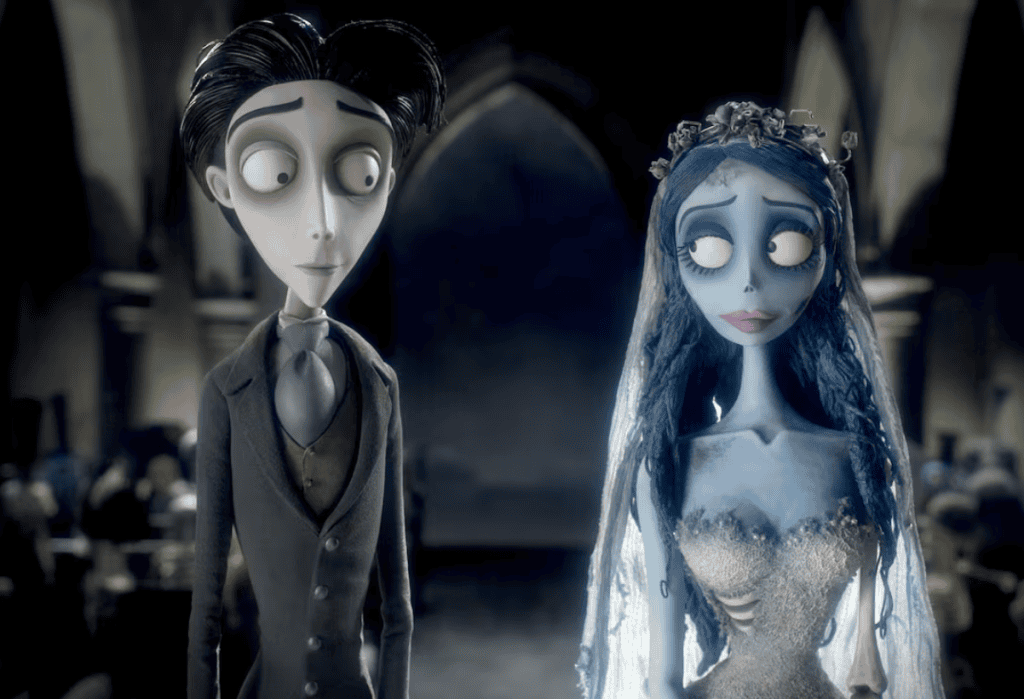
Burton continued exploring stop-motion animation with Corpse Bride (2005), which he co-directed with Mike Johnson.
The romantic fantasy follows a nervous groom who accidentally becomes engaged to a deceased bride. Beneath its macabre premise, the film explores love, loyalty, sacrifice and the difference between appearances and genuine character.
Later, Burton revisited his earlier short film with the feature-length Frankenweenie (2012), a black-and-white stop-motion story about a young boy who attempts to bring his beloved dog back to life.
These projects demonstrate his continuing fascination with animation as an expressive art form.
Johnny Depp, Helena Bonham Carter and Burton’s Creative Collaborations
An important part of Burton’s career has been his relationships with actors and creative collaborators who understand his unconventional approach to storytelling.
Johnny Depp became one of his most recognisable collaborators, appearing in films including Edward Scissorhands, Ed Wood, Sleepy Hollow, Charlie and the Chocolate Factory, Sweeney Todd: The Demon Barber of Fleet Street and Alice in Wonderland.
Their professional relationship produced some of Burton’s most memorable characters.
Depp’s ability to combine eccentric physical performances with moments of vulnerability made him particularly suited to Burton’s cinematic universe.
Another significant collaborator was Helena Bonham Carter, who appeared in several of the director’s films, including Planet of the Apes, Big Fish, Charlie and the Chocolate Factory, Corpse Bride and Sweeney Todd.
Their collaborations helped establish a recognisable creative circle around Burton, bringing together performers who could move comfortably between fantasy, comedy, tragedy and gothic storytelling.
Composer Danny Elfman has also played an essential role in shaping Burton’s cinematic identity.
From Batman and Edward Scissorhands to The Nightmare Before Christmas and Beetlejuice, Elfman’s distinctive musical compositions have become closely associated with the director’s work.
Their partnership demonstrates how music, visual design and performance can combine to create a complete cinematic atmosphere.
Wednesday: Bringing Burton’s Gothic Imagination to a New Generation
Tim Burton’s influence has extended into television, where his work on Netflix’s Wednesday introduced his distinctive visual approach to an entirely new generation.
The series centres on Wednesday Addams, the darkly humorous and unusually intelligent daughter of the Addams Family, as she investigates mysterious events at Nevermore Academy.
Starring Jenna Ortega, the series combines supernatural mystery, teenage drama, gothic aesthetics and Burton’s fascination with outsiders.
Burton directed several episodes of the first season and served as an executive producer. His involvement was particularly significant because Wednesday’s personality and visual identity naturally complement many of the themes that have defined his filmmaking career.
The series became a major global television success, with Ortega’s performance attracting widespread attention and helping establish Wednesday as a contemporary pop-culture figure.
Its success also demonstrated the continued relevance of Burton’s artistic approach.
In an entertainment landscape increasingly influenced by fast-moving trends, audiences responded to a character who embraces her individuality rather than attempting to fit in.
The second season, released in 2025, continued the story and expanded the supernatural world surrounding Nevermore Academy.
For Burton, Wednesday represents more than a return to familiar gothic territory. It shows how his creative sensibilities can adapt to a new medium while remaining recognisable to longtime fans.
From Beetlejuice to Big Fish: The Emotional Side of Tim Burton
Although Burton is often described as a director of dark fantasy, his work frequently explores universal emotional experiences.
Big Fish (2003) is perhaps one of the clearest examples.
The film follows a son attempting to understand his dying father through the extraordinary stories he has told throughout his life. Combining magical realism, family drama and fantasy, it examines memory, storytelling, love and the complicated relationships between parents and children.
Similarly, Ed Wood (1994) celebrates an unconventional filmmaker whose lack of technical ability never diminished his enthusiasm for cinema.
Rather than presenting its central character as a simple joke, Burton approaches him with affection and respect. The result is a film about ambition, friendship and the determination to pursue a creative dream despite repeated setbacks.
These stories reveal another dimension of Burton’s filmmaking.
His interest in outsiders is not limited to characters who look unusual. It also extends to people whose ambitions, personalities or circumstances place them outside conventional expectations.
Ultimately, his films often suggest that human connection matters more than appearances.
Tim Burton and the Influence of Fashion, Art and Popular Culture
Burton’s influence reaches well beyond film.
His visual language has inspired fashion designers, illustrators, photographers, musicians and artists who share his fascination with gothic romanticism and unconventional beauty.
The combination of dark tailoring, exaggerated silhouettes, striped patterns, dramatic makeup and theatrical styling has become closely associated with his creative world.
His characters have also influenced Halloween costumes, merchandise, collectible figures and contemporary alternative fashion.
Wednesday Addams, Edward Scissorhands, Beetlejuice and Jack Skellington have become recognisable cultural figures whose popularity continues across generations.
Burton’s influence is also evident in the continuing popularity of gothic-inspired entertainment, particularly stories that combine supernatural elements with humour, romance and emotional vulnerability.
His work has helped demonstrate that dark aesthetics do not need to be associated exclusively with horror. They can also communicate sensitivity, imagination and individuality.
For many fans, his films provide a visual language for expressing parts of themselves that do not always fit comfortably within mainstream culture.
Beyond the Screen: The Artist Behind the Filmmaker
Tim Burton’s creative identity extends beyond directing.
He has maintained a lifelong interest in drawing, painting and illustration, often developing characters and visual concepts through sketches before they reach the screen.
His artwork offers a more personal insight into the imagination behind his films. The figures are frequently exaggerated, delicate, strange and sometimes unsettling, yet they often possess an unexpected sense of innocence.
The exhibition The World of Tim Burton, which has travelled internationally, has allowed audiences to explore this side of his creativity through drawings, paintings, sculptures, photographs and other artistic material.
These works demonstrate that Burton’s visual identity did not originate solely from Hollywood production design. It developed through years of personal experimentation and an enduring fascination with the unusual.
His artistic practice also helps explain the consistency of his filmography. Whether working in live-action cinema, animation or television, he approaches storytelling with the eye of an illustrator and the imagination of a visual artist.
Why Tim Burton Is October 2026’s Icon of the Month
Tim Burton is an especially fitting choice for October, a month traditionally associated with Halloween, supernatural storytelling and gothic imagery.
However, his selection as Iconic Times’ Icon of the Month is about much more than seasonal relevance.
Few filmmakers have developed such a recognisable creative identity while maintaining a lasting connection with mainstream audiences. Burton has built a cinematic universe where fantasy and reality meet, where dark humour sits alongside genuine emotion and where characters who appear different are often the most sympathetic.
His influence spans several generations. Audiences who discovered Beetlejuice and Edward Scissorhands decades ago can share their enthusiasm with younger viewers discovering Wednesday for the first time.
His films have also helped challenge traditional ideas about beauty, normality and belonging. Instead of presenting difference as something that must be corrected, Burton repeatedly places outsiders at the centre of his stories.
That message remains relevant in contemporary culture, where individuality and self-expression continue to shape conversations about identity and creativity.
His career also demonstrates the importance of maintaining a distinctive artistic vision. Burton has never needed to abandon his creative instincts to become recognisable. Instead, he has built an international reputation by developing a world that audiences can identify within seconds.
For Iconic Times, that is the essence of an icon.
The Enduring Legacy of Tim Burton
Tim Burton’s contribution to cinema cannot be measured through box-office success or awards alone.
His greatest achievement may be the creation of a visual and emotional language that has become part of popular culture. His films have introduced audiences to unforgettable characters, imaginative worlds and stories that encourage people to look beyond appearances.
From the lonely Edward Scissorhands to the ambitious Jack Skellington, from the eccentric Beetlejuice to the determined Wednesday Addams, Burton’s characters share a common quality: they refuse to become ordinary simply to satisfy other people’s expectations.
That is perhaps why his work continues to resonate.
In a world that often celebrates conformity, Burton has consistently found beauty in the unusual. His stories remind audiences that imagination has no obligation to follow conventional rules and that being different can be a source of strength rather than weakness.
As October 2026 brings another Halloween season into focus, his creative universe feels as relevant and recognisable as ever.
Tim Burton is more than a filmmaker with a distinctive gothic style. He is an artist, storyteller and cultural influence whose work has helped redefine modern fantasy cinema.
The darkness is imaginative. The characters are unforgettable. And the beauty has always been in seeing the world differently.
That is why Tim Burton is Iconic Times’ Icon of the Month for October 2026.














Comments are closed.