
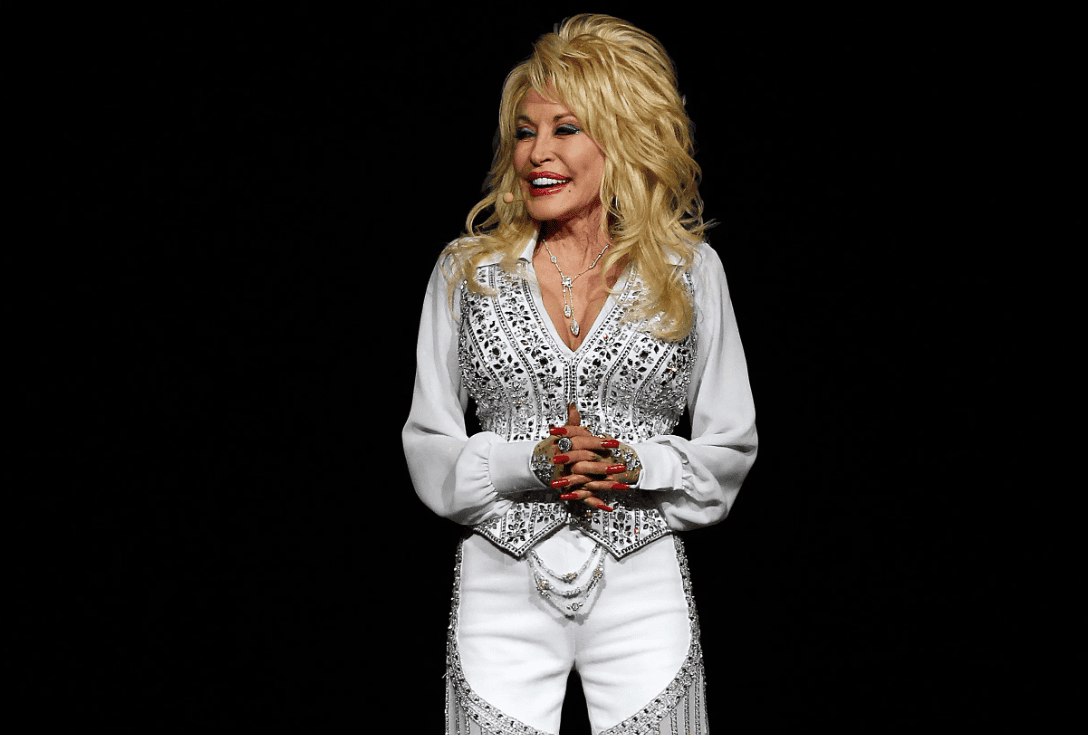
Dolly Parton was never simply a country singer.
She was a songwriter, actress, entrepreneur, philanthropist, cultural architect and, perhaps most importantly, an unmistakable American original. With her rhinestones, towering blonde hair, sharp wit and unmistakable voice, she built a public persona so distinctive that it became inseparable from the woman behind it. Yet beneath the glamour was an artist of extraordinary discipline and emotional intelligence — someone who could write about heartbreak with devastating simplicity, build an entertainment empire from the ground up and quietly change the lives of millions of children.
On August 25, 2026, Dolly Parton died at the age of 80.
Her death closes one of the most remarkable chapters in modern popular culture. But the world she created is unlikely to disappear. Her songs remain embedded in the cultural memory, her business ventures continue to shape communities, and her philanthropic work has reached generations who may never have owned one of her records.
Dolly Parton leaves behind something larger than a discography.
She leaves behind a legacy.
From a One-Room Cabin to Nashville
Parton’s story began far from the glamour that would later surround her.
Born in Tennessee into a family of 12 children, she grew up in poverty in a one-room cabin in the Great Smoky Mountains. Her father worked as a farmer and construction worker, while her mother cared for a large family and inspired one of Parton’s most beloved songs, “Coat of Many Colors.”
Music was present from the beginning.
Parton sang in church, appeared on local television as a child and recorded her first record at just 13. That same year, she performed at Nashville’s Grand Ole Opry, introduced by Johnny Cash.
She had already decided what she wanted.
“I always wanted to be a star,” she later said.
But becoming one would require more than talent.
It would require an almost extraordinary combination of persistence, instinct and self-belief.
The Songwriter Who Could Say Everything in a Few Minutes
Parton’s greatest gift was always songwriting.
Her catalogue eventually stretched into the hundreds, but two songs alone would have been enough to secure her place in music history.
“Jolene” and “I Will Always Love You” were both written in 1973 — astonishingly, on the same day.
They reveal two sides of Parton’s genius.
“Jolene” is intimate, desperate and almost conversational: a woman pleading with another woman not to take the person she loves. “I Will Always Love You,” meanwhile, is a farewell — tender rather than bitter, vulnerable rather than theatrical.
The songs became cultural landmarks in their own right.
“I Will Always Love You” would later be transformed by Whitney Houston into a global pop phenomenon through The Bodyguard, becoming one of the most commercially successful singles ever recorded by a female artist.
But Houston’s version never erased Parton’s authorship.
Instead, it demonstrated the remarkable durability of her writing.
Parton could write songs that survived genres, generations and entirely different voices.
That is the definition of songwriting greatness.
The Woman Who Refused to Be Reduced to a Stereotype
Parton’s appearance was often treated as a joke by people who underestimated her.
The blonde hair. The elaborate costumes. The rhinestones. The exaggerated femininity. The playful sexuality.
But Dolly understood something that many of her critics did not:
the image was part of the strategy.
She knew exactly how memorable she was.
Her famous wit — including the line about how much money it takes “to look this cheap” — allowed her to control the joke before anyone else could make it.
She turned femininity into armour and glamour into branding long before personal branding became an industry.
Behind the deliberately exaggerated image was a fiercely intelligent businesswoman who understood audiences, ownership and longevity.
Dolly Parton was never trapped by her persona.
She owned it.
Country Was Only the Beginning
Parton became one of country music’s most successful performers, eventually achieving 25 US country No. 1 singles and 47 albums in the country Top 10.
But she repeatedly refused to remain inside one category.
She moved into pop.
She moved into rock.
She moved into film.
She moved into television.
She moved into musical theatre.
And she did it without abandoning the musical identity that made her distinctive.
Her 1980 hit “9 to 5” became one of the defining songs of its era while also providing the soundtrack to the film in which she starred alongside Jane Fonda and Lily Tomlin. The song earned Parton an Oscar nomination and became another example of her ability to cross seamlessly between entertainment worlds.
Then came films including The Best Little Whorehouse in Texas, Rhinestone and Steel Magnolias.
For many artists, diversification can dilute identity.
For Dolly Parton, it strengthened it.
The Businesswoman Behind the Rhinestones
Parton’s genius extended far beyond music.
In 1986, she became involved with the Tennessee theme park that would become Dollywood. Over the following decades, the attraction expanded into a much larger entertainment destination, surrounded by hotels, cabins, restaurants, theatres, spas and water attractions.
She also founded Sandollar, a production company that would eventually be associated with projects including Buffy the Vampire Slayer and Father of the Bride.
It was a different kind of celebrity empire — one built not simply around selling products with her name on them, but around creating experiences and institutions.
Parton understood something fundamental about fame:
a career becomes a legacy when the audience can enter the world you created.
The Legacy That Cannot Be Measured in Record Sales
Yet perhaps the most extraordinary part of Dolly Parton’s legacy has nothing to do with music.
It is books.
In 1995, she launched the Imagination Library, initially providing free books to children in her home county. The programme eventually expanded internationally.
More than 150 million books have been distributed through the initiative.
Its philosophy was deeply personal.
Parton’s father could not read or write, and she understood the limitations that illiteracy could place on a person’s life. But she also understood the emotional power of giving a child something that belonged specifically to them.
A book arriving in the mail was not simply educational.
It told a child that someone was thinking about them.
That idea became one of the defining philanthropic projects of her life.
A Celebrity Who Used Fame as a Resource
Parton’s philanthropy extended far beyond literacy.
She supported disaster relief in Tennessee, contributed to medical institutions, supported wildlife conservation and advocated for causes involving equality and human rights.
In 2020, she donated $1 million to Vanderbilt University Medical Center’s Covid-19 research. That funding became associated with research contributing to the development of Moderna’s vaccine.
The gesture captured something fundamental about Parton’s approach to celebrity.
She understood that fame could be more than attention.
It could be infrastructure.
It could build schools, fund research, create jobs, distribute books and preserve communities.
Dolly’s Most Radical Achievement
Perhaps the most impressive thing about Dolly Parton was that she never allowed the world to decide what kind of woman she was supposed to be.
She came from poverty but became wealthy without abandoning the culture that shaped her.
She was considered glamorous but remained deeply connected to country traditions.
She was underestimated because of her appearance and turned that underestimation into one of her greatest strengths.
She was simultaneously a global celebrity and someone who could make herself feel familiar.
That balance is extraordinarily difficult to achieve.
Parton made it look effortless.
The Lasting Power of Dolly Parton
Her final studio album, Rockstar, arrived in 2023, decades after she first walked onto the Nashville stage as a teenager.
By then, her influence had become almost impossible to measure.
You could hear Dolly in country music.
You could hear her in pop.
You could see her influence in celebrity branding, female entrepreneurship, entertainment tourism and philanthropic celebrity culture.
You could find her in the careers of younger artists who grew up with her songs.
And you could find her in the millions of children who received a book because of a programme she created.
Her career was never simply about becoming famous.
It was about deciding what to do with fame once she had it.
An Icon Beyond Country Music
Dolly Parton understood spectacle, but she also understood substance.
She knew how to create a hook, a character, a business, a destination and a cultural moment. She knew how to laugh at herself without diminishing herself. She knew how to embrace glamour without allowing glamour to become the whole story.
Most importantly, she understood people.
Her songs spoke to heartbreak, ambition, poverty, desire, work, family and hope because she never treated ordinary lives as insignificant.
That may ultimately be why her music endured.
Dolly Parton made people feel seen.
And that is a much greater achievement than simply being heard.
At 80, she leaves behind one of the most extraordinary legacies in American entertainment — a body of work that crossed generations, a business empire that continues beyond her, and a philanthropic mission that has touched millions.
The rhinestones will remain.
The songs will remain.
The books will keep arriving.
And somewhere in the enduring mythology of American popular culture, Dolly Parton will remain exactly where she always belonged:
larger than life, impossible to imitate, and completely, unmistakably herself.





Comments are closed.