
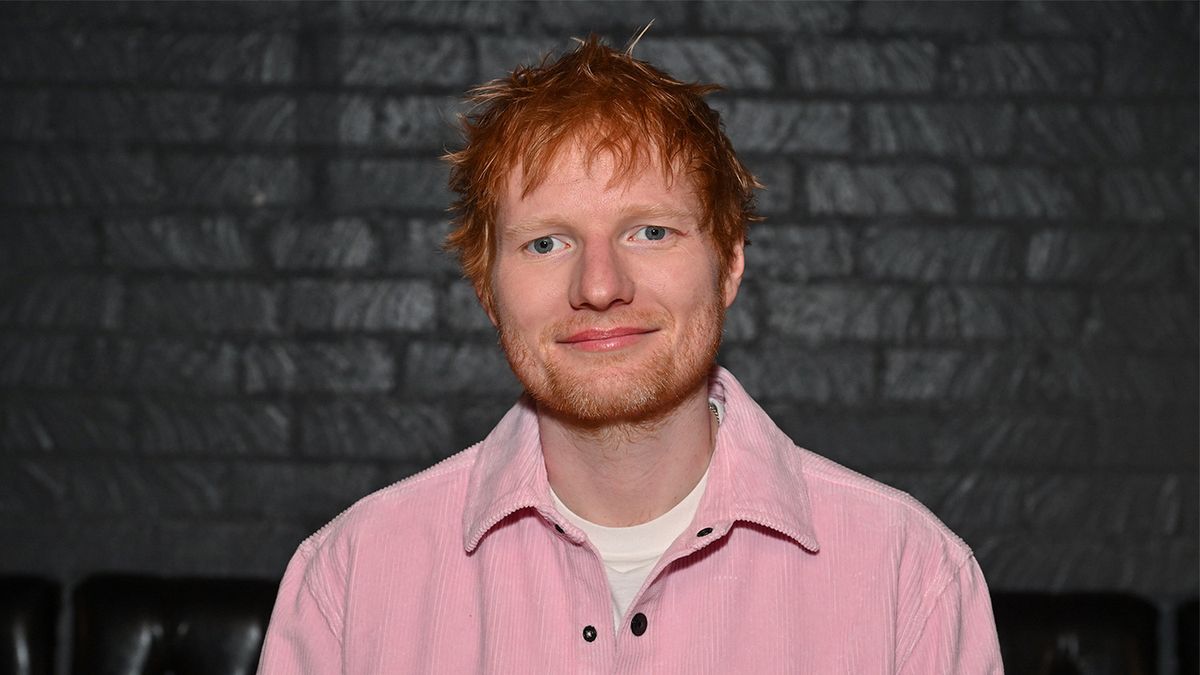
Ed Sheeran has addressed the growing backlash surrounding Macklemore’s removal from the US leg of his Loop Tour, insisting that the decision was made by the promoter and venue owners rather than by him.
The controversy began after Macklemore used the stage during Sheeran’s concert at MetLife Stadium in New Jersey to voice support for Palestinians in Gaza and the occupied West Bank. His comments, including a call to “Free Palestine,” triggered criticism from pro-Israel groups and prompted several venues to object to his continued participation in the tour.
Messina Touring Group, the promoter of the North American leg, later confirmed that Macklemore would not perform at the remaining US dates after venues reportedly said they would not host concerts with him on the lineup.
Sheeran responded in a lengthy Instagram statement, explaining that he felt it was important to clarify his position.
“It’s important that I set out some facts,” he wrote.
Sheeran Says the Decision Was Not His
Sheeran explained that Macklemore had asked to join the tour the previous year and that he agreed because he respected him as an artist.
According to Sheeran, Macklemore was allowed to choose his own set list, as were the other opening acts. During his first appearance at MetLife Stadium on 4 September, Macklemore delivered a speech supporting the people of Gaza and the occupied West Bank.
“A big part of the reason why I wanted to do this tour in the first place is so I could stand up in stadiums like this and say two words that are very near and dear to my heart: free Palestine,” Macklemore told the audience.
He also performed “Hind’s Hall,” his protest song inspired by the war in Gaza and the killing of six-year-old Hind Rajab.
At his second MetLife performance the following day, Macklemore again spoke about Palestine and addressed Jewish members of the audience.
“Criticism of Israel, criticism of apartheid, being against genocide in no way is a criticism of you,” he said. “My message is for peace, love; for all human beings to be treated with dignity, respect and equality.”
Following the performances, the Israeli American Council launched a petition calling for Macklemore to be removed from the tour. Venue owners subsequently informed the promoter that they would not allow concerts to proceed with Macklemore as an opening act.
Sheeran said he attempted to mediate between promoters, venue owners and people on both sides of the debate, but that the final decision was outside his control.
“Macklemore coming off tour was the promoter’s decision, it was not mine,” he wrote.
“I would never let down the fans who had made plans, nor would I abandon the touring crew and the other support acts and musicians who rely on me for work and to make a living.”
A Debate Over Art, Politics and Public Platforms
Sheeran’s statement came after Macklemore published his own lengthy response, describing difficult conversations between the two musicians.
The pair have reportedly been friends for more than a decade, and Macklemore referred to Sheeran as a close friend and “brother.” However, he maintained that their friendship could not prevent him from speaking publicly about the war and the suffering of Palestinians.
Macklemore has been an outspoken supporter of Palestinian rights for years. His song “Hind’s Hall,” released in 2024, became a protest anthem after he criticised Israel’s military campaign in Gaza and expressed solidarity with pro-Palestinian demonstrators.
His comments during the Sheeran tour were criticised by pro-Israel organisations, some of which argued that he was using a global concert platform to promote a political agenda. Other artists and supporters defended his right to speak about human rights and the war.
The controversy has consequently developed into a wider debate about artistic freedom, political expression and the responsibilities of performers appearing on large commercial stages.
Sheeran’s Position on Political Expression
In his statement, Sheeran said that he is “appalled” by the conflict between Israel and Palestine and described the suffering on both sides as a human tragedy.
“The suffering and pain caused on both sides is a human tragedy,” he wrote. “There are too many wars across the world causing immeasurable pain, none of which should be tolerated.”
However, Sheeran explained that he prefers to use his concerts as spaces that bring people together rather than as platforms for political declarations.
“I have always used my platform and music to bring people from all backgrounds and cultures together and this won’t ever change,” he wrote.
He added that he chooses to use his fame as “a place of safety and sanctuary,” where conversations remain open rather than becoming more divided.
“I am not complicit,” Sheeran stated. “I have my personal views on this devastating conflict. Just because I choose not to speak publicly, it doesn’t mean I don’t have them, and it doesn’t mean that I don’t care.”
His comments were interpreted by some as an attempt to distinguish personal beliefs from the public role he wants his concerts to play. Macklemore, however, had previously criticised what he described as Sheeran’s typically apolitical stance.
The disagreement has highlighted the difficult position artists can find themselves in when commercial tours, political statements and personal relationships collide.
Venue Owners and the Power to Decide
According to the tour promoter, venue owners said they would not permit concerts featuring Macklemore, creating the possibility that entire shows could be cancelled.
Robert Kraft, owner of the New England Patriots and the Kraft Group, which operates Gillette Stadium in Massachusetts, was among the venue figures connected to the controversy.
Kraft has described himself as committed to combating antisemitism and has criticised Macklemore’s past rhetoric and recent performances. Macklemore, meanwhile, has denied that his criticism of Israel is antisemitic and has argued that support for Palestinian rights should not be treated as hostility towards Jewish people.
The dispute illustrates how much influence stadium owners and concert promoters can have over artistic lineups. Although performers may control what they say on stage, their ability to do so can depend on contracts, venues, sponsors and commercial relationships.
In this case, the promoter said the decision was made after discussions with the relevant stakeholders and that Macklemore would no longer appear on the remaining support dates.
Aaron Rowe Withdraws From the Tour
Hours after Sheeran issued his statement, Irish musician Aaron Rowe announced that he would withdraw from the remaining US shows.
Rowe said the decision was not made lightly, describing Sheeran as a friend who had changed his life. However, he explained that he could not continue as normal while artists speaking about Palestine were being removed from major concert platforms.
“As Irish people we know all too well about genocide, forced famine and violent occupation,” Rowe wrote.
He criticised what he described as the use of wealth and power to silence voices speaking about Palestinian suffering.
“I need to be true to myself and my ancestors who resisted colonisation, and fought for a freedom that I enjoy today in Ireland,” he added.
He concluded his statement with “Free Palestine.”
Rowe’s withdrawal added another layer to the controversy, turning the dispute from a disagreement over one opening act into a broader discussion about solidarity among musicians.
What Happens Next?
Sheeran’s North American tour is scheduled to continue, with the remaining dates expected to proceed without Macklemore and Rowe.
The tour is due to resume in Philadelphia on 19 September and conclude in November at Raymond James Stadium in Tampa, Florida.
The situation remains politically and culturally charged. Sheeran has attempted to separate himself from the decision while defending his preference for a less overtly political concert environment. Macklemore has continued to stand by his comments, arguing that speaking about Palestinian suffering is part of his responsibility as an artist.
Meanwhile, other musicians are being forced to consider where they stand on the issue and whether continuing to participate in major commercial tours is compatible with their own political and ethical positions.
At the centre of the dispute is a question that extends beyond Ed Sheeran and Macklemore: should artists be able to use commercial stages to speak about political crises, and who should have the authority to decide when those statements cross a line?
For Macklemore, the answer appears to be connected to the responsibility of using his platform to speak for people he believes have been forgotten.
For Sheeran, the priority is keeping his concerts open to audiences from different backgrounds while attempting to maintain dialogue.
The disagreement has not erased their personal history, but it has exposed the difficult boundaries between friendship, commercial responsibility, artistic freedom and political expression.





Comments are closed.