
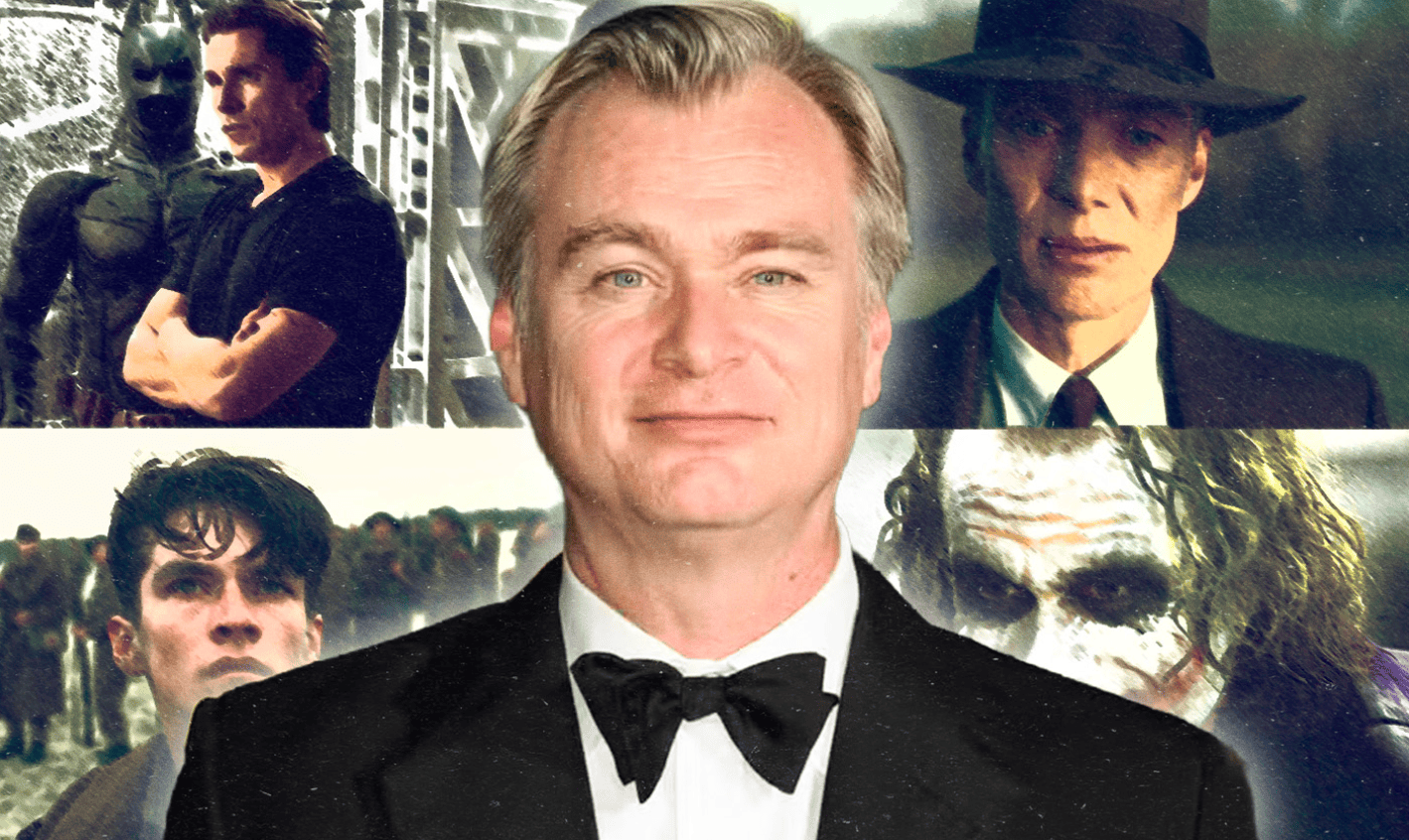

Christopher Nolan has become one of the few directors whose name alone can sell a movie. In an era dominated by sequels, shared universes, and franchise filmmaking, Christopher Nolan continues to prove that ambitious, original stories can become global box office successes. Whether exploring the mysteries of time, morality, memory, or human ambition, his films consistently challenge audiences while delivering blockbuster spectacle.
From The Dark Knight trilogy to Inception, Interstellar, Oppenheimer, and the highly anticipated The Odyssey, Nolan has established himself as one of the defining filmmakers of the 21st century. His unique blend of intellectual storytelling, practical filmmaking techniques, and cinematic scale explains why his work continues to captivate audiences around the world.
What Makes Christopher Nolan So Popular?
Few directors enjoy the level of trust that Nolan has built with moviegoers. His reputation means audiences often buy tickets before they know much about the story, a remarkable achievement in today’s entertainment industry.
Unlike many blockbuster filmmakers, Nolan consistently develops original concepts that demand attention. His movies rarely rely on simple narratives. Instead, they invite viewers to actively participate by piecing together timelines, uncovering hidden meanings, and questioning what they see on screen.
This combination of accessibility and complexity has allowed Nolan to appeal to both mainstream audiences and dedicated film enthusiasts.
Christopher Nolan’s Signature Storytelling Style
Time, Memory, and Non-Linear Narratives
One of the defining characteristics of Christopher Nolan’s filmmaking is his fascination with time.
Rather than telling stories in chronological order, Nolan often restructures time itself into a narrative device. Films like Memento, Inception, Dunkirk, and Tenet challenge audiences to think differently about cause and effect, memory, and perspective.
Instead of creating confusion for its own sake, these unconventional structures serve a deeper purpose. They place viewers inside the minds of the characters, allowing them to experience uncertainty, urgency, or emotional disorientation firsthand.
Big Ideas Drive Every Story
Many filmmakers begin with characters and build a plot around them. Nolan often does the opposite.
His stories usually start with a bold central concept:
- Dream-sharing technology in Inception
- Reverse entropy in Tenet
- Space exploration and relativity in Interstellar
- Nuclear history and moral responsibility in Oppenheimer
- Crime, justice, and chaos in The Dark Knight
These high-concept ideas provide the foundation for stories that blend entertainment with philosophy, science, and ethics.
Why Christopher Nolan Films Feel Different
Practical Effects Create Realism
One reason Nolan’s movies stand apart is his commitment to practical filmmaking.
Rather than depending heavily on computer-generated imagery, he frequently uses real locations, physical sets, large-scale miniatures, and practical stunts whenever possible. Famous examples include the rotating hallway sequence in Inception, the full-scale aircraft crash in Tenet, and the Trinity Test recreation in Oppenheimer, which famously avoided CGI.
These choices give his films a tangible weight that audiences instinctively recognize. The visuals feel grounded because much of what appears on screen actually happened in front of the camera.
IMAX as a Storytelling Tool
Christopher Nolan has also become one of the strongest advocates for large-format filmmaking.
His extensive use of IMAX cameras has pushed both filmmakers and theaters to embrace higher-resolution film formats. Rather than treating IMAX as a marketing gimmick, Nolan uses the format to immerse viewers in landscapes, action sequences, and emotional moments that feel larger than life.
The result is a cinematic experience designed specifically for the big screen.
The Intellectual Appeal of Christopher Nolan Movies
Perhaps Nolan’s greatest strength is his ability to make audiences think without sacrificing entertainment.
Many of his films revolve around philosophical questions that remain long after the credits roll.
Consider just a few examples:
- Can dreams shape reality?
- Does time define our relationships?
- How much responsibility comes with scientific discovery?
- Is justice possible without moral compromise?
- Can human perception ever be fully trusted?
Rather than providing simple answers, Nolan encourages audiences to interpret events for themselves. This puzzle-like approach has made many of his films highly rewatchable, with viewers discovering new details each time.
Redefining the Superhero Genre
When Batman Begins debuted in 2005, superhero films were still largely viewed as escapist entertainment.
Christopher Nolan transformed that perception.
His Dark Knight Trilogy grounded Batman in a realistic world shaped by crime, politics, surveillance, and ethical dilemmas. Instead of relying solely on comic book spectacle, the films explored fear, sacrifice, corruption, and the cost of heroism.
The Dark Knight in particular elevated expectations for superhero cinema and demonstrated that comic book adaptations could be treated as serious dramatic works without losing mainstream appeal.
Its influence can still be seen across modern superhero filmmaking.
Original Films That Become Global Events
One of Nolan’s rare achievements is his ability to attract massive audiences without depending on established franchises.
Most major studios rely heavily on recognizable intellectual property. Nolan, however, has repeatedly proven that original ideas can become worldwide phenomena.
Inception became a cultural sensation despite introducing an entirely original science-fiction concept.
Interstellar combined theoretical physics with emotional family drama to become one of the most discussed science-fiction films of its generation.
Even Oppenheimer, a three-hour historical drama centered on theoretical physics and nuclear ethics, became a billion-dollar global success while winning widespread critical acclaim.
Very few contemporary directors possess that level of audience trust.
Why Christopher Nolan’s Legacy Continues to Grow
Nolan’s influence extends well beyond his own filmography.
His dedication to practical effects has inspired other filmmakers to prioritize physical craftsmanship over excessive visual effects. His support for film photography has helped preserve traditional filmmaking techniques in an increasingly digital industry.
Meanwhile, his storytelling style has encouraged audiences to embrace more sophisticated narratives within mainstream cinema.
With anticipation already building around The Odyssey, expectations remain incredibly high. Yet Nolan’s consistent track record suggests audiences are eager for another ambitious cinematic experience, regardless of the subject matter.
Conclusion
Christopher Nolan occupies a unique place in modern filmmaking because he successfully combines blockbuster entertainment with intellectual ambition. His films reward curiosity, challenge conventional storytelling, and deliver unforgettable cinematic experiences through practical effects, large-format filmmaking, and thought-provoking ideas.
Whether reinventing the superhero genre, exploring the mysteries of time, or examining humanity’s greatest moral questions, Christopher Nolan continues to redefine what blockbuster cinema can achieve. His ability to balance artistic vision with worldwide commercial success makes him one of the most influential directors of his generation, and a filmmaker whose legacy will continue shaping cinema for decades to come.












Comments are closed.