
Introduction: When Privacy Becomes the Real Luxury
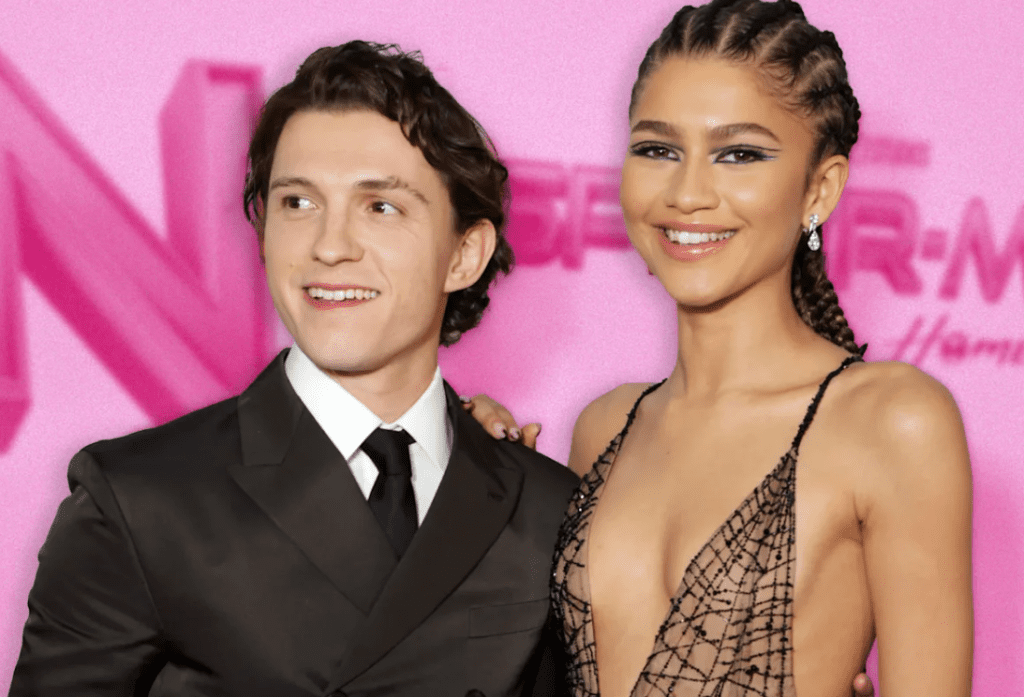
In an era where celebrity relationships are dissected in real time, Zendaya and Tom Holland occupy a rare cultural paradox: a couple defined not by what they reveal, but by what they refuse to perform. Their story is endlessly speculated upon, endlessly reframed by the internet, yet deliberately underwritten by restraint.
In a recent appearance on the New York Times’ Modern Love podcast, Zendaya offered something that felt almost disarming in its simplicity. Not a revelation designed for headlines, but a description of emotional steadiness — of feeling calmer, more grounded, and less fragmented when someone is simply there. In a media landscape built on spectacle, her words landed like a quiet refusal to participate in it.
A Bond Formed Before the Spotlight Fully Arrived
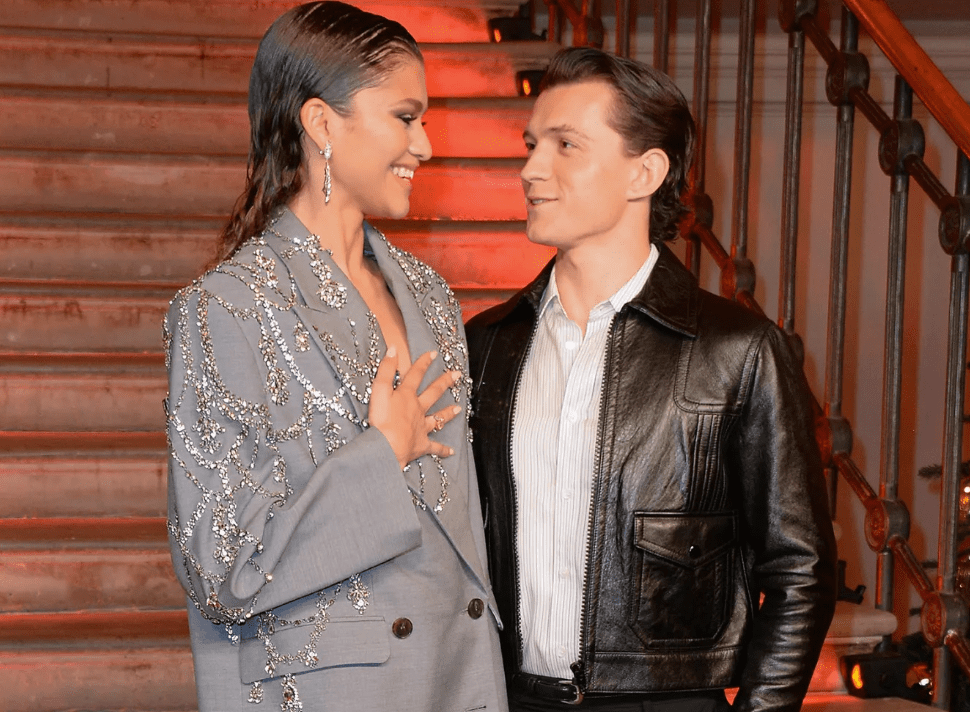
Their relationship predates the scale of global attention that would eventually define them. Zendaya and Tom Holland first crossed paths during early Spider-Man auditions in 2016, long before red carpets and franchise expectations hardened around them. What began as professional proximity inside a blockbuster machine gradually became something more structurally intimate: familiarity built through repetition, pressure, and shared creative rhythm.
Across the Spider-Man trilogy, their on-screen dynamic as MJ and Peter Parker mirrored a parallel evolution off-screen — one shaped less by celebrity mythology and more by the practical realities of growing up within a franchise. Zendaya has described Holland not in grand, cinematic terms, but as a presence that softened the edges of an otherwise chaotic environment. Someone who made the room feel easier to inhabit.
That sense of ease, she suggested, became foundational — not dramatic, not performative, but steady enough to endure the acceleration of fame.
From Superhero Sets to Auteur Cinema
Now both actors are moving beyond the Marvel universe into a broader cinematic phase, including collaboration with Christopher Nolan on The Odyssey. It marks a transition that feels symbolic: from cultural omnipresence to something more selective, more auteur-driven, and arguably more demanding.
Yet even as their careers expand in different directions, their professional overlap continues to shape public fascination. Hollywood has long romanticized co-stars who evolve into partners, but rarely with this level of sustained visibility across years and franchises. The result is not just a relationship, but a shared career architecture — one that blurs the boundary between private life and professional continuity.
The Parasocial Era and the Illusion of Knowing
What makes Zendaya’s comments particularly resonant is not what she confirms, but what she gently resists. The modern celebrity ecosystem thrives on parasocial certainty — the belief that audiences can map emotional truths from fragments of interviews, stylist comments, or red carpet gestures.
Zendaya acknowledges this dynamic without feeding it. Even small external remarks — such as speculative interpretations of comments from stylist Law Roach — tend to spiral into broader narratives about marriage, permanence, or future milestones. Yet her approach remains consistent: neither denial nor confirmation, but redirection toward boundaries.
There is an unspoken discipline in that stance. A recognition that not everything meaningful must be publicly legible.
Privacy as a Form of Stability
What emerges from her reflections is not a fairytale romance, but something more structurally modern: a relationship designed to survive visibility. The couple’s private world, as described by Zendaya, exists in deliberate contrast to their public one. Premieres, interviews, and promotional cycles belong to the audience; everyday intimacy does not.
In that division lies the real architecture of their stability. The ability to separate spectacle from substance is increasingly rare in celebrity culture, where even silence is often interpreted as narrative fuel. Zendaya’s framing suggests something different — that intimacy does not require amplification to remain real.
Conclusion: The Quiet Rebellion of Not Explaining Everything
In Hollywood, silence is often mistaken for absence, and privacy for absence of story. Zendaya and Tom Holland complicate that assumption. Their relationship is not constructed around secrecy, but around selectivity — a conscious refusal to turn emotional life into public content.
Perhaps what makes their dynamic so compelling is precisely its resistance to interpretation. In a culture addicted to explanation, they remain partly unreadable. And in that unreadability, they reclaim something increasingly rare in modern fame: a life that belongs, at least in part, only to the people living it.






Comments are closed.