
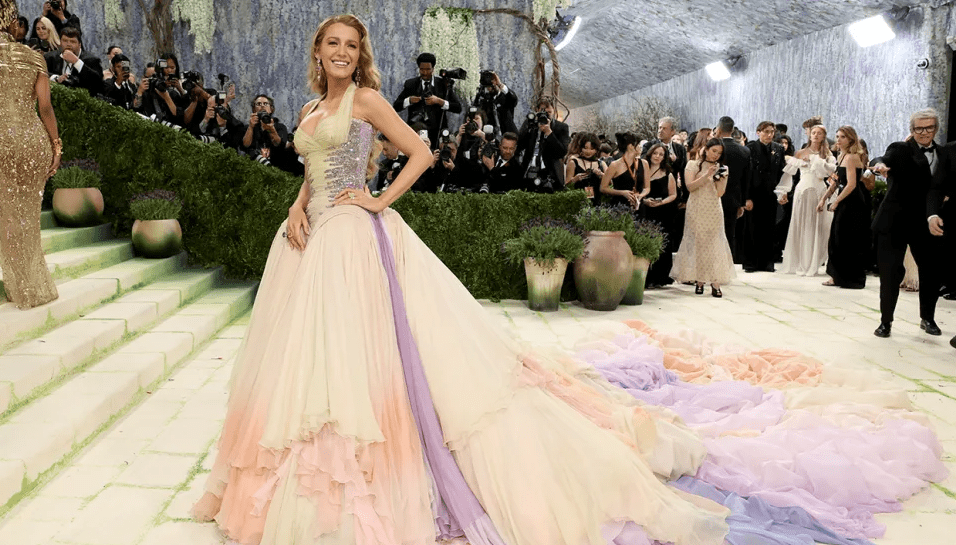
After a four-year absence, Blake Lively stepped back onto the Met Gala red carpet in 2026 with a presence that felt less like a return—and more like a statement. Held at the iconic Metropolitan Museum of Art, fashion’s biggest night became the stage for one of the most talked-about celebrity comebacks of the year.
Her appearance came just hours after the settlement of a highly publicized legal battle tied to It Ends With Us, closing a turbulent chapter that had dominated headlines. But rather than address controversy directly, Lively chose a more powerful route: silence, symbolism, and style.
The Look That Said Everything Without Saying a Word
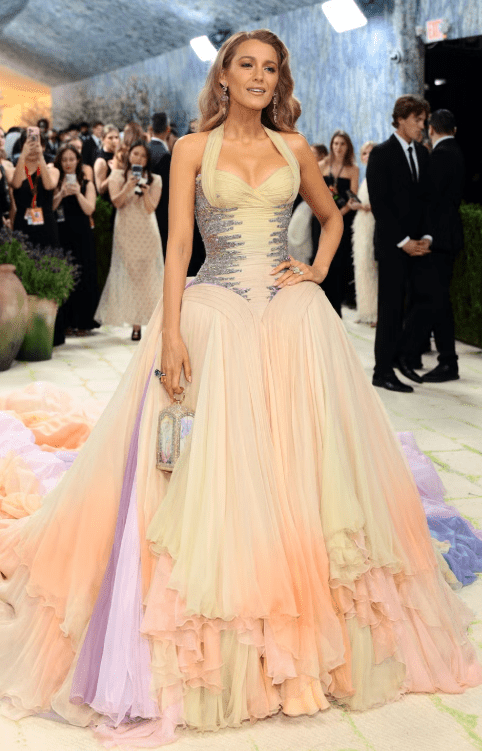
Wearing an archival Atelier Versace gown, Lively embraced a soft, ethereal color palette inspired by sunset hues—pinks, peaches, lilacs, and golds. The look balanced nostalgia with quiet confidence, echoing a return to the essence of what made her a red carpet icon in the first place.
Her beauty choices followed the same narrative. With delicate, almost “princess-like” makeup—glossy pink lips, shimmering purple eyes, and radiant skin—Lively avoided dramatic reinvention. Instead, she leaned into familiarity, reinforcing a sense of identity and control.
This wasn’t about shock value. It was about stability, intention, and reclaiming narrative power.
From Gossip Girl to Met Gala Royalty
Lively’s influence didn’t happen overnight. Rising to fame through Gossip Girl, she quickly evolved from TV star to global fashion muse. Over the years, she became synonymous with Met Gala excellence—frequently topping best-dressed lists and even co-chairing the event alongside industry leaders.
Her ability to consistently deliver memorable fashion moments positioned her as more than just an attendee. She became part of the Met Gala’s cultural identity.
The Power of Playing It Smart
In an era where celebrity comebacks often rely on dramatic reinventions, Lively took a different path. Her return was calculated, subtle, and emotionally intelligent.
Rather than distancing herself from her past image, she embraced it. This strategy signals confidence—an understanding that authenticity resonates more than spectacle. It’s a move often seen in high-level personal branding: when controversy hits, consistency becomes power.
By presenting a refined, recognizable version of herself, Lively reminded audiences why they connected with her in the first place.
Reinvention Through Resilience
Lively’s journey reflects a broader narrative in modern celebrity culture: the ability to endure public scrutiny and emerge stronger. While many public figures struggle to regain footing after controversy, her comeback demonstrates control over timing, messaging, and visual storytelling.
She didn’t just return to the spotlight—she reframed it.
This moment signals a shift from reactive fame to intentional influence, proving that longevity in Hollywood isn’t just about talent, but strategy.
Why Blake Lively Remains an Icon
Cultural Staying Power: From television to high fashion, Lively has remained relevant across multiple industries.
Red Carpet Authority: Few celebrities command attention at events like the Met Gala with such consistency.
Narrative Control: Her ability to reshape public perception without direct confrontation highlights a modern form of celebrity intelligence.
Authenticity Over Shock: In a culture driven by extremes, Lively’s subtlety stands out—and wins.
A Comeback That Redefines Modern Celebrity
Blake Lively’s Met Gala 2026 appearance wasn’t just about fashion—it was about authorship. By choosing elegance over explanation, she demonstrated that true influence doesn’t always need a voice.
Sometimes, presence is enough.
And in that moment, she didn’t just return—she reclaimed her place at the top of the cultural conversation.






Comments are closed.