


Alysa Liu and the New Era of Olympic Icons
For decades, Olympic greatness followed a familiar formula: relentless discipline, quiet humility, and unwavering obedience to tradition.
Then came Alysa Liu.
At just 20 years old, Liu has already secured her place in sports history as the first American woman since 2002 to win Olympic gold in individual figure skating. Yet her cultural impact reaches far beyond the ice.
She is not just a champion. She is a symbol of something larger — a generational shift in how athletes approach success, identity, and personal freedom.
While previous champions were defined by sacrifice and perfection, Liu represents a different kind of excellence: one that leaves room for individuality, joy, and self-definition.
In many ways, her journey mirrors the evolving values of Gen Z athletes, who increasingly challenge outdated expectations surrounding mental health, pressure, and identity.
And in doing so, Alysa Liu may have quietly reshaped what it means to be an Olympic icon.
A Champion Who Refused to Play by the Old Rules
When Liu won Olympic gold at the 2026 Winter Olympics in Milan, she did not immediately launch into the endless media circuit that typically follows such a historic victory.
Instead, she went home.
Back to the Bay Area. Back to her friends. Back to the people who knew her before the spotlight.
The celebration was refreshingly simple: good food, laughter, and a gathering of friends digging through piles of Olympic gear she had brought back from Italy.
It was the kind of moment rarely seen in elite sports — one that reflected Liu’s grounded personality and refusal to let fame dictate her priorities.
“I pick hanging out with my friends over a session,” she has said openly. “If that makes me a worse skater, so be it.”
In the high-pressure world of Olympic athletics, that statement alone feels quietly revolutionary.
Walking Away From Fame — And Returning Stronger
Perhaps the most defining chapter of Liu’s career happened before her Olympic triumph.
In 2022, after already competing at the Beijing Olympics and earning a bronze medal at the World Championships, she made a decision that shocked the skating world.
She retired.
At just 16 years old.
The announcement stunned fans and analysts alike. For decades, elite athletes were expected to push forward relentlessly, regardless of burnout or exhaustion.
But Liu chose something different: herself.
During the pandemic, she experienced something unfamiliar — a genuine day off. For the first time in years, she had space to breathe, explore hobbies, and simply exist outside the rigid structure of competitive skating.
She gamed. She watched anime. She hiked. She went to school like a normal teenager.
And most importantly, she rediscovered who she was beyond the ice.
That period of self-discovery ultimately led her back to skating — but on entirely new terms.
The Return That Redefined Olympic Greatness
When Alysa Liu returned to competition, she looked different from the traditional image of a figure skater.
Her two-toned halo hair, smiley-face piercing, and playful style broke from the sport’s long-standing aesthetic expectations.
But her performances remained nothing short of extraordinary.
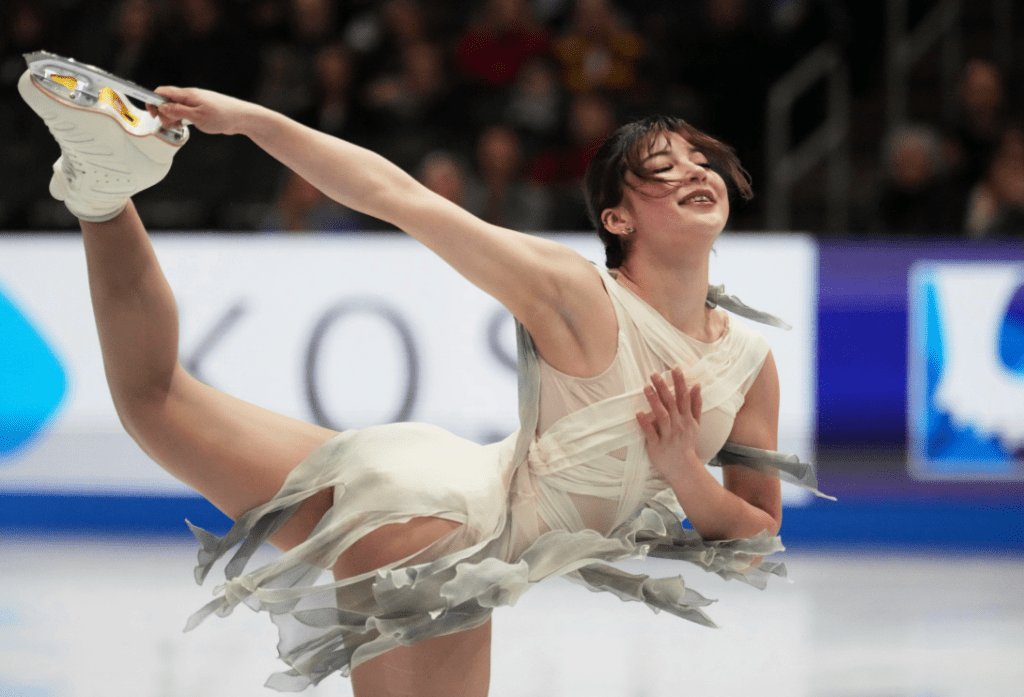
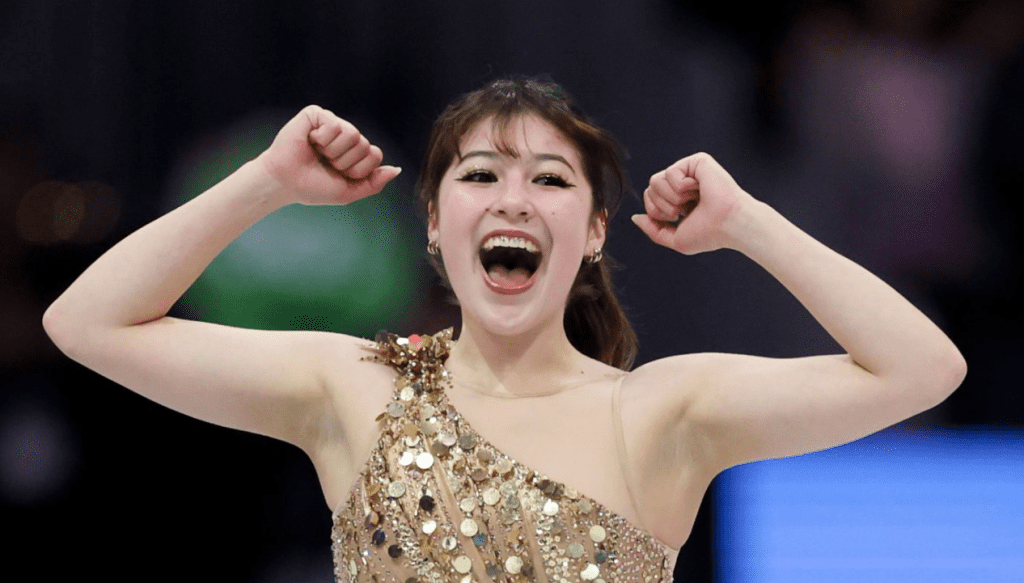
At the 2026 Olympics, Liu delivered one of the most captivating free skate routines in recent memory, performing to Donna Summer’s iconic “MacArthur Park Suite.” Her gold dress shimmered under arena lights as she moved across the ice with an effortless combination of artistry and athletic precision.
It was a performance that felt less like a competition routine and more like a statement.
A statement that skating could be both elite and expressive.
Disciplined and joyful.
Serious and playful.
The audience responded instantly — not just to her technical brilliance, but to the authenticity that radiated through every movement.
An Olympic Star Who Speaks Her Mind
Unlike many athletes who carefully avoid political or social conversations, Liu has never been afraid to speak openly about the issues that shape her worldview.
As the daughter of a Chinese immigrant and political activist who fled the country following the Tiananmen Square protests, she grew up in a household where independence and speaking out were core values.
Her father’s influence helped shape her willingness to engage with complex issues surrounding immigration, identity, and representation.
Rather than viewing activism as risky, Liu sees it as natural.
For her, storytelling itself is a form of advocacy.
“Storytelling promotes empathy,” she has said.
In an era where athletes increasingly use their platforms to discuss social issues, Liu’s voice feels particularly powerful because it remains rooted in personal experience.
Ignoring the Internet Noise
In today’s hyper-digital sports culture, public opinion can feel overwhelming.
Yet Liu seems uniquely immune to online chaos.
She does not obsess over commentary or criticism. In fact, she has carefully curated her online experience to avoid the negativity that often surrounds elite athletes.
She uses TikTok, but rarely encounters discourse about herself.
Instead, she mostly sees fan edits celebrating her routines.
It’s a simple but effective strategy: control what you consume.
By filtering out digital noise, Liu has protected something many elite athletes struggle to maintain — peace of mind.
Skating as Art, Not Just Competition
One of Liu’s most fascinating qualities is how she approaches skating as an art form rather than merely a technical sport.
Her routines blend choreography, fashion, music, and storytelling in ways that resonate beyond the scoreboard.
Even her Olympic gala performance offered a glimpse into her creative inspirations.
Her costume was inspired by Madoka Kaname, a character from the anime Puella Magi Madoka Magica. The show’s themes of sacrifice, transformation, and destiny resonated deeply with Liu’s own journey.
Like Madoka, Liu understands the cost of greatness — but she also knows the importance of maintaining control over one’s own story.
The Cultural Impact of Alysa Liu
Olympic champions come and go.
Icons leave lasting cultural footprints.
What makes Alysa Liu extraordinary is not just her ability to land difficult jumps or dominate international competitions.
It’s her perspective.
She represents a generation that refuses to sacrifice mental health for medals, individuality for tradition, or joy for perfection.
In many ways, Liu reflects the broader evolution of sports culture itself.
Athletes today are no longer simply competitors; they are storytellers, activists, creators, and role models navigating global conversations about identity and authenticity.
And in that shifting landscape, Alysa Liu stands at the forefront.
A Champion Who Skates for Joy
Perhaps the most powerful aspect of Liu’s story is how she views success.
For her, winning Olympic gold was never the sole measure of fulfillment.
She has openly admitted that she would have been happy even if the medal never came.
Because what truly drives her is something simpler.
The love of skating.
The thrill of pushing herself.
And the freedom to live life on her own terms.
In a world obsessed with results and rankings, that mindset feels refreshingly radical.
Alysa Liu didn’t just win the Olympics.
She redefined what winning looks like.












Comments are closed.