
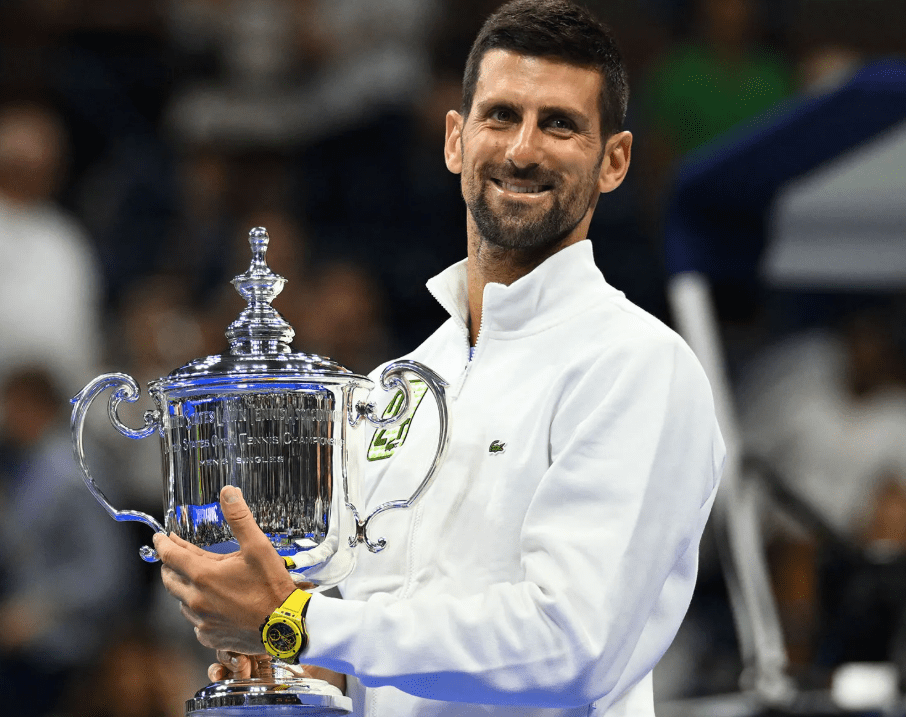
“We’re individual athletes,” says Novak Djokovic about the sport that defined his life. “Everything we do, we do by ourselves.”
Few statements describe professional tennis more accurately—and few athletes embody that reality more completely than Djokovic. For nearly two decades, the Serbian superstar has carried the burden of expectation, rivalry, controversy, and national pride almost entirely on his own shoulders.
Today, he stands not just as one of the greatest players in tennis history, but as one of the most dominant athletes modern sport has ever seen.
From Belgrade to Global Dominance
Born in Belgrade in 1987, Djokovic grew up during one of the most turbulent periods in Serbia’s modern history. As a child, he lived through the bombing of the city during the NATO bombing of Yugoslavia, a formative experience he often recalls when speaking about resilience and perspective.
Tennis, however, offered an escape.
At just four years old, Djokovic began hitting balls on courts near the mountain resort where his parents ran a small café. It was there that legendary Serbian coach Jelena Genčić spotted his talent and famously predicted he would one day become the best player in the world.
That prophecy eventually came true.
The Era of the Big Three
For most of the 2010s, men’s tennis was defined by a legendary rivalry between three icons:
Roger Federer, Rafael Nadal, and Djokovic.
The trio collectively dominated the sport for over fifteen years, rewriting records and redefining athletic longevity.
Yet Djokovic’s rise was unique.
Unlike Federer’s effortless elegance or Nadal’s brute-force intensity, Djokovic built his dominance on relentless precision—elastic defense, unmatched return of serve, and a mental toughness that turned long matches into psychological wars.
Many analysts now consider him the most complete player tennis has ever seen.
The Numbers Behind the Legend
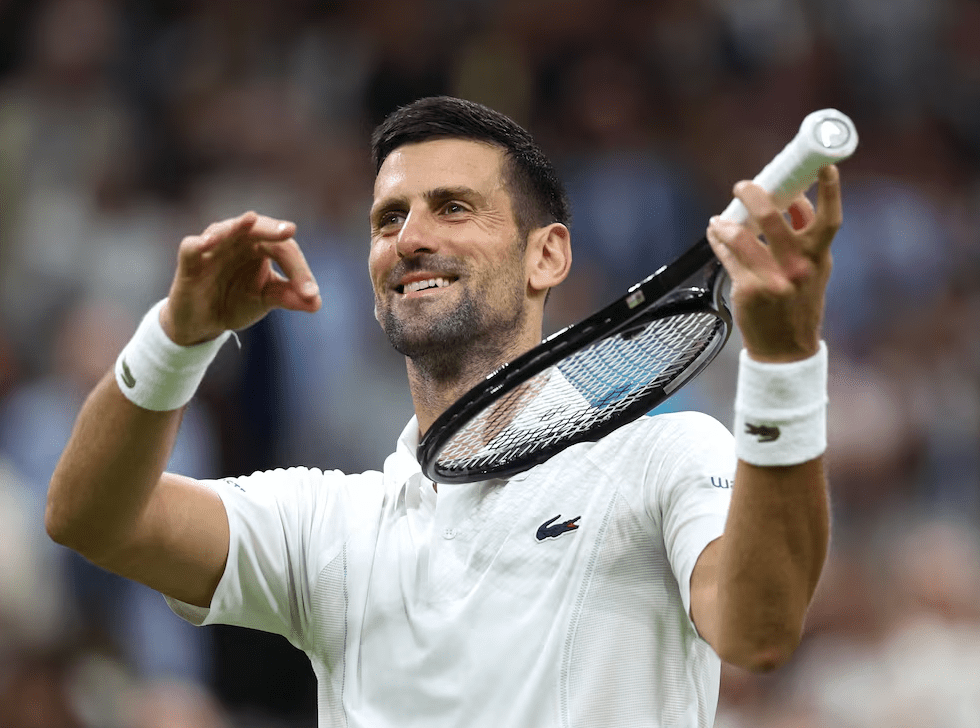
As of the mid-2020s, Djokovic has achieved records that once seemed untouchable.
He holds the record for the most weeks ranked world No.1 in the ATP Tour rankings and has captured more Grand Slam titles than any male player in the Open Era.
His victories across tournaments like the
Australian Open,
Wimbledon Championships, and
US Open
have cemented his place among sport’s immortals.
But numbers alone cannot explain Djokovic’s impact.
His career has always been about something more intense: endurance.
The Mindset of a Gladiator
Djokovic often compares tennis to combat.
Standing in the center of a packed stadium—crowds roaring, cameras flashing—he has described the feeling as stepping into an arena like a gladiator.
“You’re fighting,” he once said. “You’re screaming during your strokes. It feels like you’re an animal fighting for your life.”
That intensity became one of his trademarks.
While many champions dominate physically, Djokovic’s greatest weapon may be psychological. His ability to survive five-hour battles, save match points, and reverse seemingly lost matches has earned him a reputation as the most mentally resilient player in modern tennis.
A Controversial Champion
Djokovic’s career, however, has not been without controversy.
His outspoken views on athlete independence, health policies, and global sports governance have often placed him at the center of public debate. His visa controversy ahead of the 2022 Australian Open became one of the most discussed moments in sports politics.
Yet even critics acknowledge that his influence extends far beyond the court.
He has consistently advocated for players’ rights and helped establish the Professional Tennis Players Association in an attempt to give athletes greater control over their careers.
The Serbian Hero
Despite living for years in the glamorous Mediterranean principality of Monaco, Djokovic remains deeply connected to his homeland.
In Serbia, he is more than a sports star.
He is a national symbol.
His role in leading Serbia to victory in the Davis Cup remains one of the proudest moments of his career. For Djokovic, the tournament carries a significance far beyond individual glory.
“Success there is different,” he has said. “You don’t win it for yourself—you share it with your teammates and your people.”
Longevity in a Brutal Sport
Professional tennis is notoriously unforgiving.
The constant travel, intense training schedules, and physical wear often shorten careers. Yet Djokovic has defied the typical lifespan of a tennis champion.
Even into his late thirties, he remains competitive against players more than a decade younger.
His commitment to diet, recovery, and mental discipline—including a famously strict gluten-free nutrition plan—has helped extend his dominance well beyond the expectations of sports science.
The Legacy Question
The debate about the greatest tennis player of all time will likely continue for decades.
Fans of Federer praise his artistry. Admirers of Nadal point to his unmatched clay-court dominance.
But Djokovic’s case rests on an overwhelming combination of statistics, longevity, and head-to-head victories.
In nearly every measurable category, he stands at or near the top.
The Lone Warrior
In the end, Djokovic’s career returns to the idea he expressed so simply.
Tennis is an individual sport.
Players walk onto the court alone. They absorb the pressure alone. And they ultimately carry victory—or defeat—alone.
For nearly twenty years, Novak Djokovic has done exactly that.
And in the process, he hasn’t just played tennis.
He has rewritten its history.

















Comments are closed.