
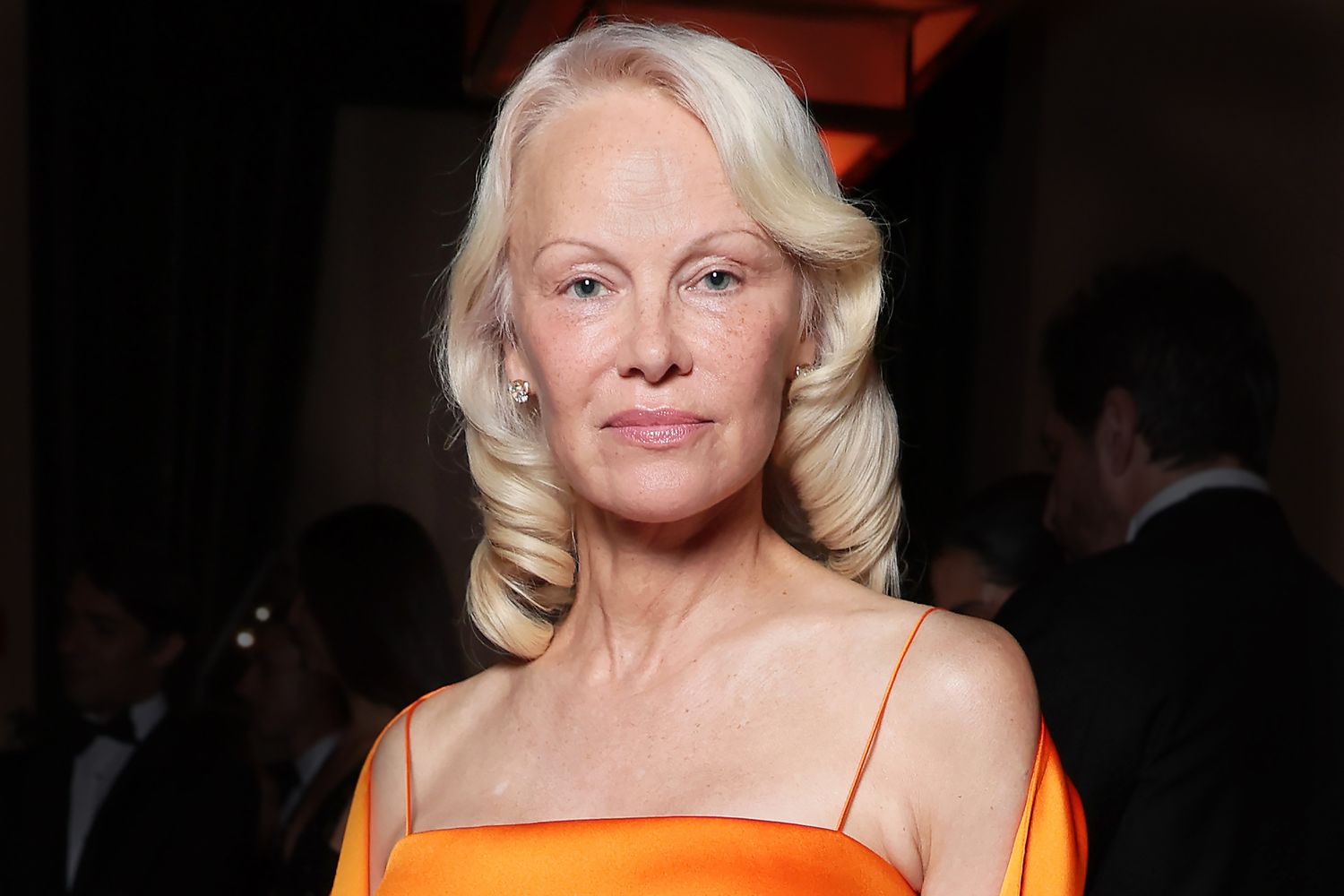
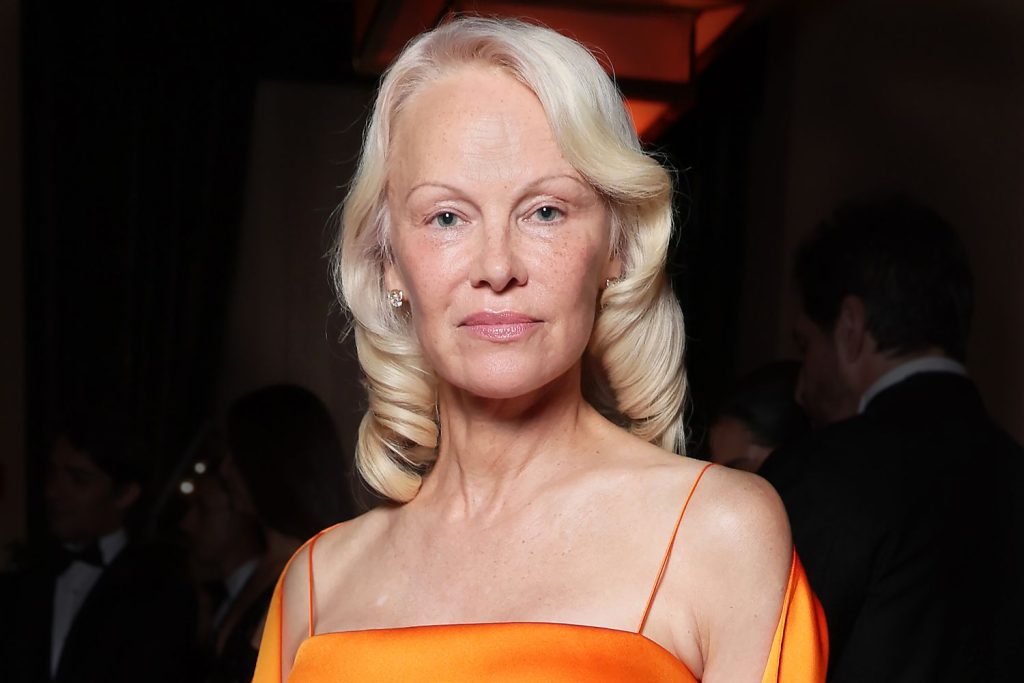
At Venice, Pamela Anderson reflected on the diagnosis that once made her fear she would not have enough time with her children — and the painful journey that ultimately transformed how she understood herself.
Pamela Anderson has spent much of her life being looked at.
At the height of Baywatch, she became one of the most recognizable faces in the world, her image reproduced endlessly and her private life transformed into public spectacle. But beneath the glamour was a woman carrying experiences that would profoundly shape the person she would become.
At the amfAR Gala Venezia in Venice, Anderson opened up about one of the most frightening chapters of her life: her hepatitis C diagnosis in 2002.
She remembers being told that she might have only around a decade to live.
For Anderson, the diagnosis was more than a terrifying medical reality. She was a young mother, raising sons Brandon and Dylan, and suddenly the future she had imagined for her family seemed uncertain.
“It was a death sentence at the time,” she recalled.
The fear was not simply about dying.
It was about leaving her children behind.
When Fear Changes Everything
Anderson has spoken about how profoundly the diagnosis altered her perspective.
She described worrying about what would happen to her young children, explaining that the experience turned her life “inside out.”
That fear followed her into the years that came afterward.
By 2015, Anderson was free of hepatitis C after receiving treatment, but the road to getting there came at a significant financial cost. She has said that the treatment consumed virtually everything she had in the bank.
The physical threat eventually passed.
The emotional aftermath did not.
The Shame That Stayed
Perhaps the most revealing part of Anderson’s story is that curing the disease did not immediately erase what the experience had done to her sense of self.
At the Venice event, she spoke about shame and guilt that continued to follow her, describing them as something that remained psychologically carved into her identity.
She connected those feelings to childhood sexual abuse she had endured, explaining how both experiences contributed to an internalized sense of being somehow damaged.
It is a difficult admission from someone whose public image was once built almost entirely around physical appearance.
For years, the world told Pamela Anderson who it thought she was.
Now, she is increasingly telling the world herself.
From Sex Symbol to Storyteller
That transformation has been visible in Anderson’s career.
Rather than retreating from the past, she has increasingly used acting and the arts to process it.
Her performance in The Last Showgirl became one of the clearest examples of that evolution. The role earned Anderson widespread critical recognition and a Best Actress nomination at the 2025 Golden Globes, marking a remarkable new phase in a career that had often been defined by her celebrity rather than her craft.
For Anderson, the work became a form of reclamation.
She described her truth as having come through her work — through finding ways to express experiences that could otherwise remain difficult to articulate.
The stage and screen became more than places to perform.
They became places to rewrite the narrative.
“I’m Not a Victim”
Perhaps the most powerful message from Anderson’s appearance in Venice was her refusal to define herself by what happened to her.
“I’m not a victim, I’m a victor,” she told the audience.
The distinction is fundamental to the way Anderson now speaks about her life.
Her story contains illness, trauma, public scrutiny and periods of extraordinary vulnerability. But she does not want those experiences to become the final chapter.
Instead, they have become material.
Material for acting.
Material for art.
Material for understanding herself.
And, ultimately, material for building a life on her own terms.
A Family Story, Too
Motherhood remains central to that journey.
Anderson’s fear following her diagnosis was rooted in the thought of what her absence would mean for her children. Today, Brandon and Dylan are adults, and Anderson continues to work alongside her family in new creative projects.
Her sons are set to produce with her on a new television project based on Barb Wire, the 1996 film that became another defining piece of her early career.
It is a striking evolution.
The young woman once surrounded by headlines is now creating projects with the sons she once feared she might not live long enough to watch grow up.
The passage of time has changed the meaning of everything.
Courage as a Way of Living
At the amfAR Gala, Anderson received the organization’s Award of Courage — an honor that feels particularly resonant given the story she chose to tell.
For Anderson, courage is not necessarily the absence of fear.
It is refusing to allow fear to dictate the size of one’s life.
She described courage as something that expands life, while fear diminishes it.
That philosophy seems to define the woman she is becoming.
There is less interest now in preserving the mythology of Pamela Anderson and more interest in revealing the person underneath it.
The result is perhaps her most compelling reinvention yet.
The Woman Behind the Image
Pamela Anderson entered the public imagination as an image.
Decades later, she is insisting on being understood as a person.
Her health crisis once made her contemplate how little time she might have left. Her experiences with shame and trauma reshaped her relationship with herself. And her work eventually gave her a language through which to reclaim those experiences.
At Venice, she was not simply reflecting on survival.
She was talking about authorship.
The ability to decide what your story means after other people have spent years deciding it for you.
Anderson survived the chapter that once felt like a death sentence.
What she has done since may be even more significant.
She has turned survival into creativity, fear into courage and a life once defined by the gaze of others into one increasingly defined by her own voice.









Comments are closed.