

Pop stardom is often framed as a peak—loud, dazzling, and fleeting. Reinvention, when it comes, is rarely granted the same spotlight. But Nicole Scherzinger has never followed the expected arc. In 2026, she isn’t merely revisiting her legacy—she’s rewriting it.
Once synonymous with the high-gloss dominance of The Pussycat Dolls, Scherzinger now stands at a rare cultural intersection: a chart-topping pop icon turned critically acclaimed theatre actress, commanding both arenas and standing ovations with equal authority.
This is not a comeback. It’s a reclamation.
The Anatomy of a Pop Phenomenon
In the mid-2000s, The Pussycat Dolls were more than a girl group—they were a global spectacle. With Scherzinger at the helm, hits like “Don’t Cha” and “Buttons” defined an era of hyper-produced, choreography-driven pop.
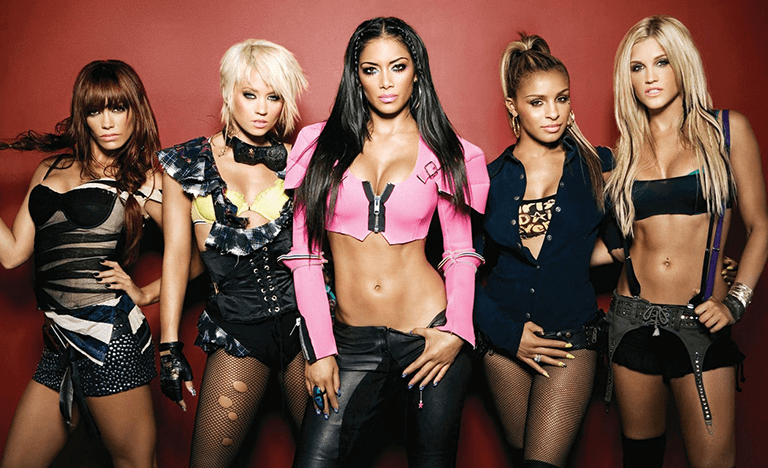
But even then, something set her apart. While the group leaned into visual precision, Scherzinger delivered live vocals with an intensity that blurred the line between pop performance and athletic endurance. She wasn’t just performing—she was competing with the limits of her own physicality.
It was this “triple threat” quality—voice, movement, presence—that would later become the foundation for her reinvention.
The Long Detour: Fame Without Fulfillment
After the initial wave of global success, Scherzinger’s career entered a more ambiguous phase. Television judging roles on shows like The X Factor and The Masked Singer kept her visible, but not necessarily artistically fulfilled.
For years, she occupied a peculiar space in the industry: widely recognized, yet persistently underestimated.
Behind the scenes, she was navigating a more complicated narrative—one shaped by industry typecasting, stalled opportunities, and the lingering perception of being “just” a pop star. The transition from music to serious acting is notoriously unforgiving, especially for women whose careers began in image-driven pop.
But Scherzinger wasn’t retreating. She was recalibrating.
Broadway, Reborn: The Role That Changed Everything
The turning point arrived with Sunset Boulevard—and with it, the role of Norma Desmond. A character defined by delusion, fragility, and fading fame, it was, at first glance, an unlikely fit.
In reality, it became the performance of her life.
Under the creative orbit of Andrew Lloyd Webber, Scherzinger delivered a portrayal that critics described as “chilling” and “career-defining.” Her performance didn’t just earn acclaim—it earned validation, culminating in both Olivier and Tony Award recognition.
More importantly, it reframed her entire career.

No longer seen through the narrow lens of pop stardom, she emerged as a fully realized dramatic actress—one capable of emotional depth, theatrical command, and raw vulnerability.
2026: The Year of Dual Dominance
If Broadway marked her artistic rebirth, 2026 represents her cultural convergence.
Scherzinger is leading a global reunion tour with The Pussycat Dolls, celebrating two decades since their debut—a moment that feels less like nostalgia and more like reclamation. New music, including the track “Club Song,” signals that the group isn’t simply revisiting the past; they are re-entering the present.
At the same time, her transition into film continues, with upcoming roles expanding her presence beyond stage and music. The balance is striking: stadium-scale performances on one hand, intimate character work on the other.
Few artists manage both. Fewer still do it convincingly.
The Power of Reinvention—and Resistance
What makes Scherzinger’s resurgence so compelling is not just its success, but its resistance to expectation. For years, she has spoken openly about feeling overlooked, boxed in, and underestimated by an industry that struggled to see beyond her pop persona.
That tension—between perception and reality—has shaped her career in profound ways.
Her return to theatre wasn’t an easy pivot; it was a fight for recognition. And in that fight, she tapped into something deeper than technical skill: emotional truth.
In many ways, her performance as Norma Desmond feels almost meta—a reflection on fame itself, on being seen, misseen, and finally understood.
Beyond the Spotlight
Offstage, Scherzinger continues to expand her influence through philanthropy, notably her work with Special Olympics and UNICEF. It’s a quieter dimension of her public life, but one that reinforces a broader narrative: longevity not just as a performer, but as a person of impact.
Her story is no longer defined by chart positions alone—it’s shaped by purpose, persistence, and evolution.
Closing Reflection
Nicole Scherzinger’s journey is not a straight line—it’s a series of reinventions, each one more intentional than the last. She has moved from pop spectacle to theatrical gravitas without abandoning either, proving that identity in entertainment doesn’t have to be singular.
In an industry that often discards its past in pursuit of the next, Scherzinger has done something far more difficult: she has integrated hers.
And in doing so, she hasn’t just returned to the spotlight—she has redefined what it means to own it.











Comments are closed.