
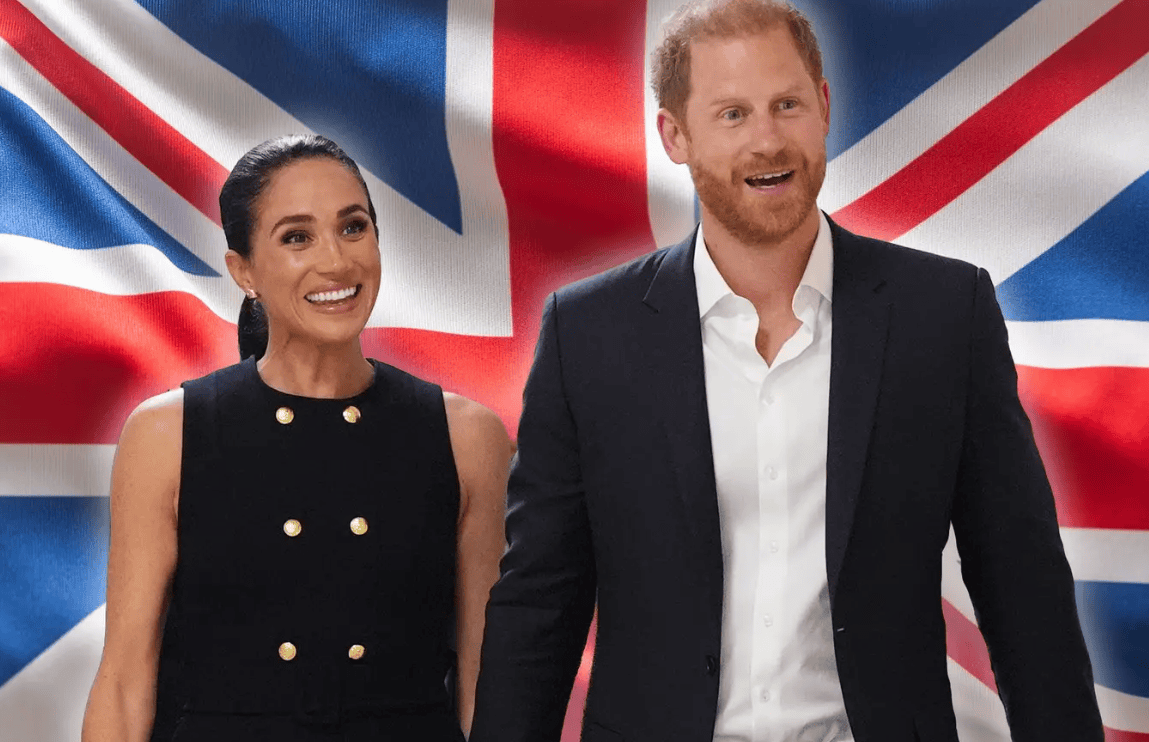
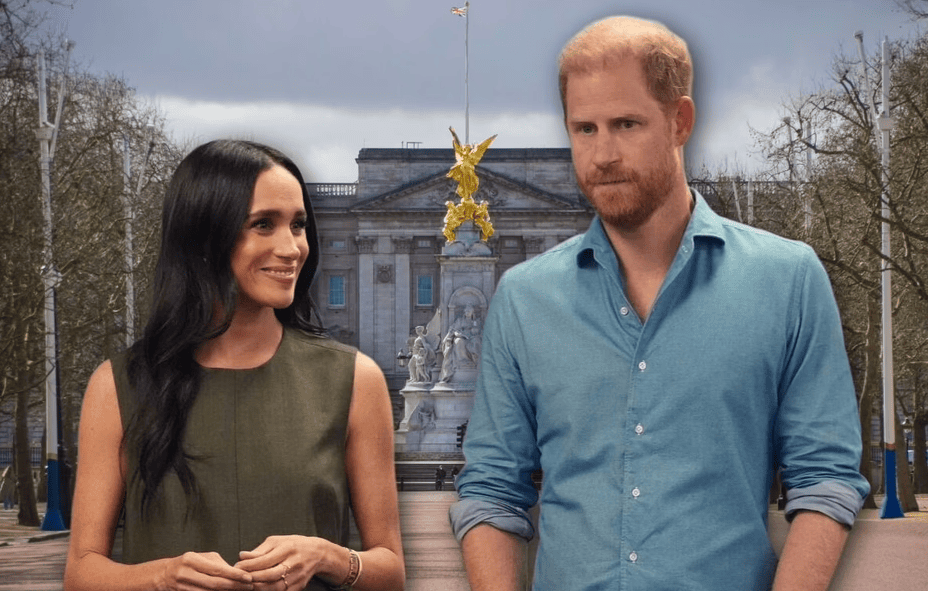
For Prince Harry and Meghan, Duchess of Sussex, Britain has never been simply a place on the map. It is home, history, family—and the setting for some of the most painful chapters of their public lives. Now, after years in California, the couple’s decision to relocate to the UK with their children is reopening an old question that has followed them since they stepped away from royal duties: how much of the institution they left behind are they willing, or able, to re-enter?
The Sussexes are expected to move into a private residence outside London later this month, with Prince Archie and Princess Lilibet due to begin school in the UK in September. They are not returning as working royals, nor does the move signal a formal restoration of their former roles. Instead, it represents something considerably more complicated: a family attempting to build a life closer to its roots while remaining outside the machinery of the monarchy.
And at the centre of that decision is security.
A Return That Changes the Equation
When Harry and Meghan stepped back from royal duties in 2020 and established their lives in California, their relationship with the British state changed dramatically. Their security arrangements were subsequently reduced, with the couple employing private protection in the United States.
That arrangement was relatively straightforward while Britain was a place they visited rather than a place they lived. A permanent return, however, creates an entirely different set of questions.
The Royal and VIP Executive Committee, known as Ravec, will have to reassess the Sussexes’ circumstances now that they are planning to make the UK their base again. Previous decisions were shaped by Harry’s status as an occasional visitor rather than a permanent resident.
The distinction is crucial. Harry remains a member of the Royal Family, a globally recognised public figure and a former British Army officer with military service in Afghanistan. Yet he and Meghan are also no longer working members of the monarchy.
That contradiction has made the question of protection one of the most persistent fault lines between Harry and the British establishment.
The Security Battle That Never Really Went Away
Few issues have been as emotionally charged for Harry as his security in Britain.
After losing a legal challenge over the level of protection provided to him and his family, the Duke made clear how seriously he viewed the issue. He has argued that bringing his wife and children to the UK without an appropriate level of security was not something he was prepared to accept.
Now, the circumstances have changed.
A permanent UK residence could mean that Ravec reassesses the threat landscape surrounding the Sussexes. It does not, however, automatically restore the level of taxpayer-funded protection Harry once received as a senior working royal.
That is where the story becomes particularly revealing. The couple may be returning to Britain, but they are not returning to the monarchy on its old terms.
Any protection granted to them will have to reflect their current status, rather than their former position. And if public funding does not cover everything Harry considers necessary, he could once again be faced with the choice of personally financing additional security.
The issue is therefore about more than police protection. It is a visible reminder of the unresolved boundary between royal privilege and private independence.
The Family Story Behind the Headlines
Yet focusing solely on security risks missing the more intimate reason for the move.
The Sussexes’ relationship with the Royal Family has been strained for years, particularly following their departure from royal life, their interviews, documentary projects and Harry’s memoir. But the possibility of rebuilding family connections has remained an important thread beneath the public drama.
Their recent visit to Highgrove appears particularly significant.
The couple and their children spent time with King Charles at his Gloucestershire home, marking the first time the King had seen Archie and Lilibet in person for more than four years. The meeting also came against the backdrop of Charles’s cancer diagnosis and Harry’s previous comments about wanting to spend more time with his father.
Highgrove, unlike the grandeur associated with Buckingham Palace, has long carried the atmosphere of a private family retreat. That setting matters. For a family whose personal relationships have repeatedly been played out beneath the enormous glare of the monarchy, a quieter environment offers something increasingly rare: the possibility of being simply relatives.
For Harry, there is another powerful emotional connection to Britain—his mother, Diana, Princess of Wales.
Diana’s Shadow—and a New Generation
The timing of the move also places Harry closer to the Spencer side of his family.
His recent visits to Althorp, the Spencer family estate, have highlighted the continuing importance of his mother’s legacy. With the 30th anniversary of Diana’s death approaching next year, Britain is likely to become an even more prominent setting for remembrance and public reflection.
For Harry, returning is therefore not merely about reconnecting with the Windsor family. It potentially brings his children closer to the landscape, relatives and history associated with their grandmother.
Archie and Lilibet have spent much of their childhood in California, geographically distant from the institutions and traditions that shaped their father. Growing up partly in Britain could give them a relationship with their family history that is difficult to cultivate from across the Atlantic.
That may ultimately be one of the most consequential aspects of the Sussexes’ decision.
A New Chapter, Not a Royal Comeback
The temptation will be to interpret the move as a reconciliation story—or even as the beginning of a royal comeback. Neither description quite fits.
Harry and Meghan are expected to remain private citizens. Meghan’s media career and her lifestyle brand, As Ever, can continue from Britain, while the family is expected to retain its California home.
The move also makes practical sense. Harry’s Invictus Games will be held in Birmingham next year, requiring a significant UK presence, while his charitable work and continuing relationship with British institutions inevitably demand travel.
What has changed is the geography of their lives.
California can remain the couple’s professional and personal base in many respects, but Britain may once again become the place where family, heritage and Harry’s long-standing public commitments intersect.
That creates an unusual hybrid existence: royal by blood, independent by choice, British by heritage and global by profession.
What Happens With William?
Perhaps the most difficult relationship remains the one between Harry and his elder brother, Prince William.
The brothers’ estrangement has become one of the defining personal stories of the modern British monarchy. Harry’s return inevitably places them in closer physical proximity, even if reconciliation remains uncertain.
There is no guarantee that geography will heal what years of conflict have created. In fact, living closer could make the unresolved relationship more visible.
But distance can also preserve conflict. Proximity sometimes creates opportunities that simply do not exist when two families live on opposite sides of the Atlantic.
Whether Harry’s return becomes a bridge or merely another chapter in a long-running family divide remains one of the most compelling questions surrounding the Sussexes’ next chapter.
The Sussexes Are Changing the Meaning of “Home”
There is something distinctly modern about Harry and Meghan’s return to Britain.
For decades, royal life was defined by permanence: duty, residence, hierarchy and institutional obligation. The Sussexes have challenged nearly every one of those assumptions. Their new arrangement suggests that belonging to the Royal Family does not necessarily require living within its traditional structure.
They can raise their children in Britain without becoming working royals. They can maintain a home in California while establishing another in the country where Harry was born. They can remain commercially independent while maintaining relationships with the monarchy.
That flexibility may be uncomfortable for an institution built around clearly defined roles—but it may also reflect the reality of the modern royal family.
The question is no longer simply whether Harry and Meghan can come home.
It is whether Britain, and the monarchy itself, can accommodate a version of the Sussexes that is neither fully royal nor fully removed.
And perhaps that is the real significance of their return. Harry and Meghan are not stepping back into the life they abandoned in 2020. They are attempting to create an entirely different relationship with Britain—one built less around royal duty and more around family, children, heritage and choice.
If that experiment succeeds, their return could quietly redefine what it means to leave the institution without leaving the family behind.













Comments are closed.